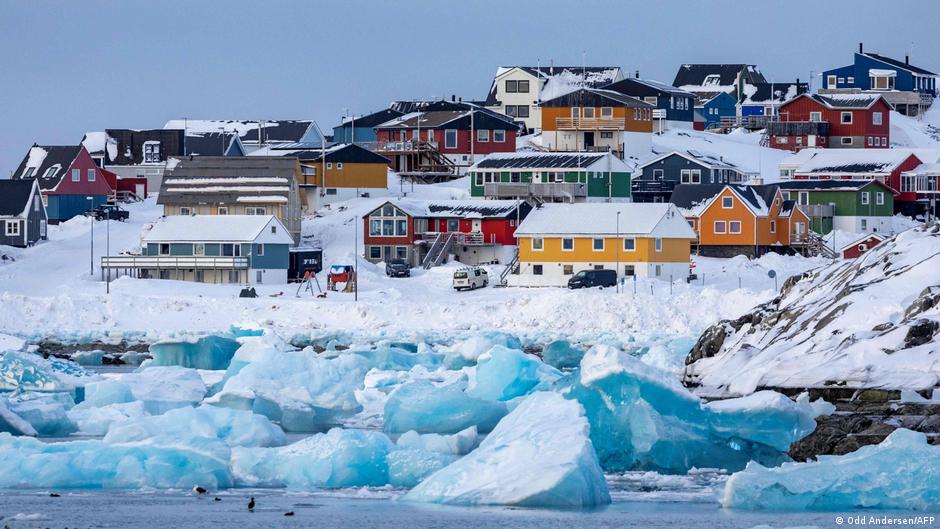
"The first humans settled in Greenland around 4,500 years ago. They came from the North American continent. In the 12th century, they were gradually displaced by Asian immigrants, the Thule people, who arrived on the island from Siberia via the Bering Strait. Their descendants are the Inuit, from whom most of the 56,000 Greenlanders today are descended."
"The island owes its name to the Viking explorer Erik the Red. According to the Icelandic sagas, he was banished from Iceland around 982 for manslaughter. He and his followers sailed west and reached the Arctic island. To encourage settlement, he named it Grnland, or "green land." While much of Greenland is covered in ice, parts of the coastal areas were relatively green during that period."
"The Norse settlements endured in Greenland for about 400 years before disappearing entirely. By the 15th century, the Inuit were once again the island's sole inhabitants. Even so, legends persisted in the Nordic world about Greenland's lost Norse settlers, said to have lived deep in the southern fjords and to possess great riches. Those stories reached Hans Egede a Norwegian priest who believed that Norse settlers might be living in Greenland and in need of spiritual guidance."
The first humans settled in Greenland around 4,500 years ago, arriving from the North American continent. In the 12th century, the Thule people arrived from Siberia via the Bering Strait and became the ancestors of today’s Inuit population. Viking Erik the Red, banished from Iceland circa 982, named the island Grnland ("green land") to encourage settlement. Norse settlements persisted for about 400 years before disappearing by the 15th century, leaving the Inuit as sole inhabitants. Legends of lost Norse settlers and riches endured, prompting Hans Egede to voyage to Greenland in 1721, where he encountered Inuit communities.
Read at www.dw.com
Unable to calculate read time
Collection
[
|
...
]