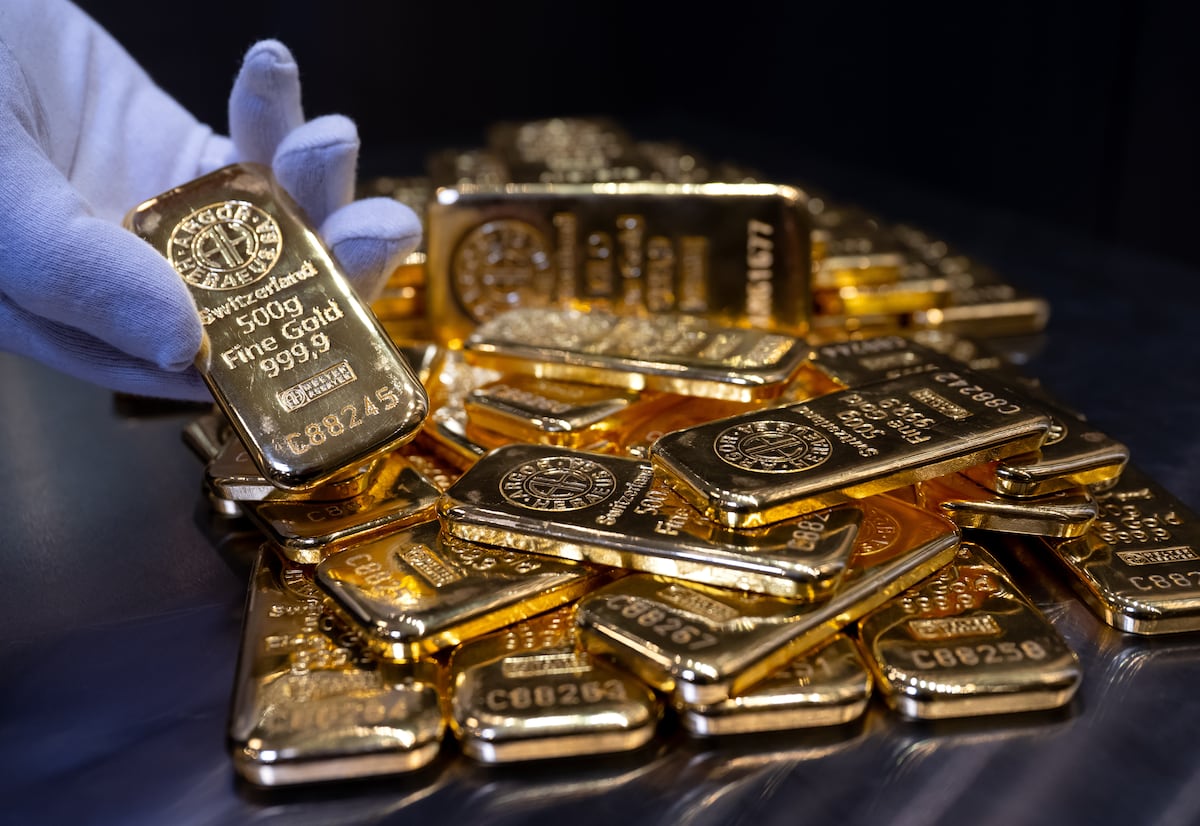
"Gold has been a symbol of wealth for thousands of years. While humans have used all sorts of instruments as money (salt, coins, banknotes, or now, algorithms), no asset even comes close to matching its historical significance. And popular culture is also full of references to the precious metal. These include historical references, like the Moscow gold sent by the Spanish Second Republic to the USSR, and television references, such as the success of the series Money Heist."
"Even in an age of futuristic mechanisms such as cryptoassets, the precious metal asserts its power not only as an investment asset capable of providing a safe haven during financial turbulence, but also as a geostrategic weapon. Central banks' gold purchases, accelerated by the outbreak of the war in Ukraine in 2022, have been a crucial factor in driving its price higher, to the point that ownership of gold bars and the physical location where they are stored is taking on a new significance."
"The turbulent international policies pursued by U.S. President Donald Trump, in open confrontation with the European Union, have sparked debate this year in countries such as Germany and Italy about the advisability of repatriating their substantial gold reserves held in the U.S. Washington declared a trade war this year, but the White House's sweeping tariff policies ultimately exempted gold, an asset too sensitive for the world's largest economy."
Gold has symbolized wealth for millennia and appears in cultural and historical references such as Moscow gold sent by the Spanish Second Republic and the television success of Money Heist. Gold functions as a safe-haven investment during financial turbulence and as a geostrategic weapon. Central-bank purchases, intensified after the 2022 war in Ukraine, have driven prices higher and increased the importance of physical ownership and storage locations. U.S. trade tensions and tariff threats prompted movements of bullion between vaults and debates over repatriation of reserves. China is a major buyer with opaque declared purchases, reflecting the asset's strategic significance.
Read at english.elpais.com
Unable to calculate read time
Collection
[
|
...
]