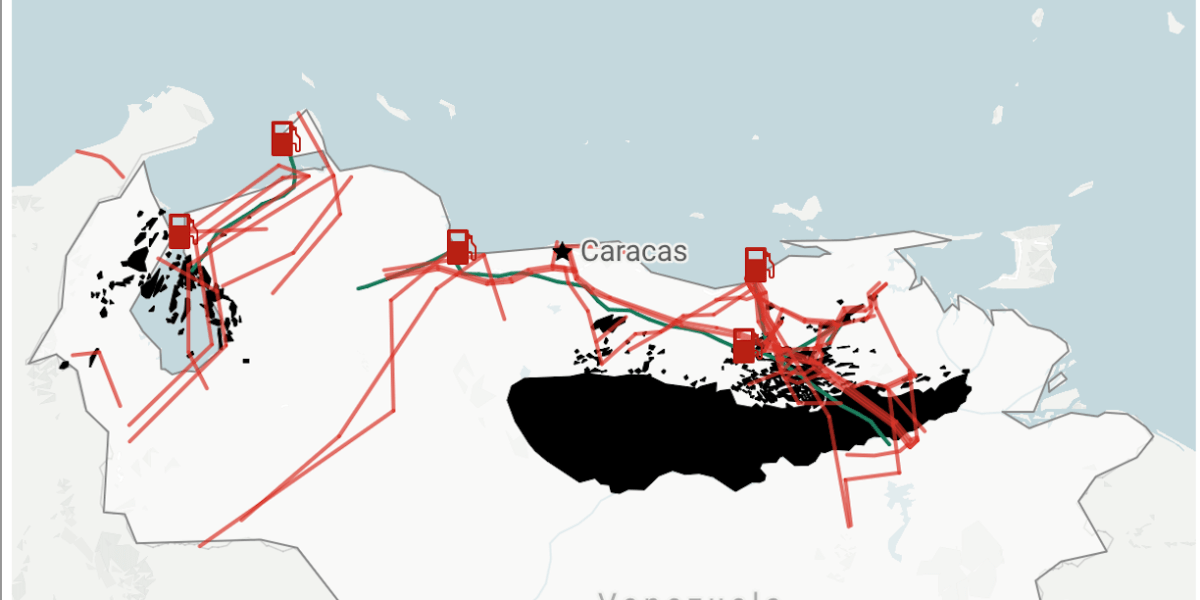
"Foreign companies, including those from the US, invested heavily in the growth of Venezuelan oil and played a heavy hand in its politics. In the face of US opposition, however, Venezuelan leaders began asserting more control over their main export resource. Venezuela was a key figure in the formation of the Organisation of Petroleum Exporting Countries (OPEC) in 1960, and it nationalised much of its oil industry in 1976."
"Then, after the 1989 riots, Chávez's recruitment efforts increased dramatically and he began planning the overthrow of Venezuela's government. In February 1992, he staged a failed coup against the pro-US president, Carlos Andrés Pérez. While he was imprisoned, his group staged another coup attempt later in the year that also failed. Chavez was jailed for two years, but emerged as the leading presidential candidate in 1998 on a socialist revolutionary platform."
Foreign investment, especially from US companies, helped build Venezuela's oil industry and influenced domestic politics. Venezuelan leaders increasingly asserted control over oil, joined OPEC in 1960, and nationalised large parts of the industry in 1976. Nationalisation harmed US firms and contributed to later accusations about stolen oil. Mismanagement of the oil sector produced a debt crisis and prompted IMF intervention in 1988. Widespread protests erupted in February 1989 and the military crushed the uprising, with official deaths near 300 and possible totals far higher. Society split between pro‑US elites and working‑class autonomy seekers, and Hugo Chávez moved from military organizing to failed coups and eventual presidential prominence.
Read at Fortune
Unable to calculate read time
Collection
[
|
...
]