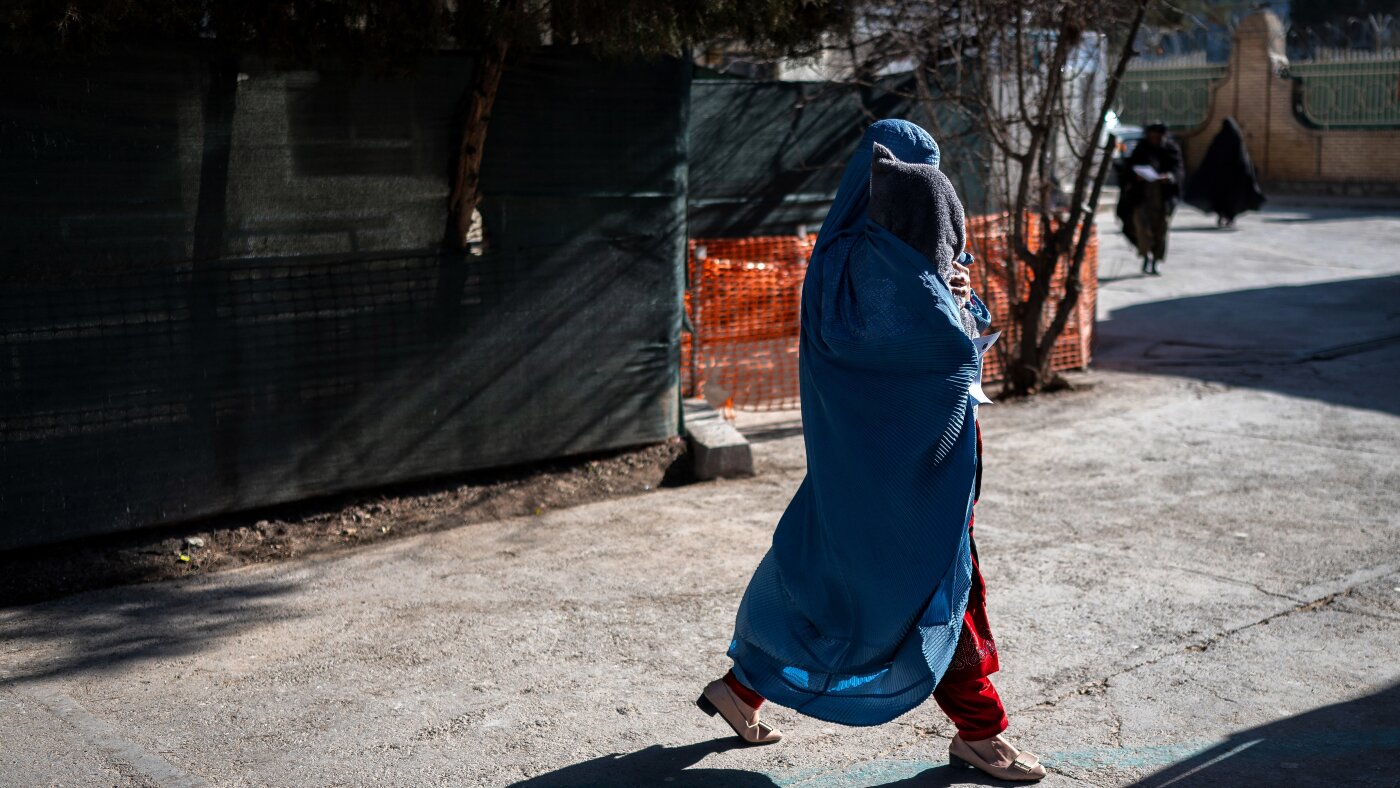
"In stop-start efforts since November, Taliban officials have cracked down on women and girls in the western city of Herat who have been ignoring the hardline group's rules by showing their faces. Enforcement agents are preventing them from entering hospitals and seminaries and pulling them out of public transport. Initially, women and girls were punished for not wearing a burka the Afghan burka is typically blue, has a netted opening for the eyes and drapes down around the body, largely constraining the woman wearing it."
"officials enforcing the rules relented and allowed women to wear the typical conservative dress in this part of Afghanistan, a voluminous cloak known as a chaddar, along with a face mask. At the main hospital in the Western city of Herat, one health worker described female staff milling outside the entryway for hours, waiting for colleagues on the night shift to hand over their burkas so they could enter like a token that allowed them "entry permission," the worker said."
"Forcing women to don burkas, to cover their faces or even to wear a hijab, or head covering, "is part of the Taliban's policy of controlling women's bodies to make women invisible," said Sahar Fetrat, a researcher in the women's rights division of Human Rights Watch. She said in a statement: "Afghan women and United Nations human rights experts have called this "gender apartheid.""
Since November, Taliban officials in Herat have intermittently cracked down on women and girls for showing their faces. Enforcement agents barred women from hospitals and seminaries, removed them from public transport, and initially punished those not wearing burkas. The burka is typically blue with a netted eye opening and drapes around the body; after pushback, officials allowed the chaddar and face masks as an alternative. At the main hospital, female staff waited outside while colleagues handed over burkas to permit entry, and a female surgeon was detained for hours for not wearing one. Human Rights Watch said forced coverings are part of controlling women's bodies and cited Afghan women and U.N. experts calling it "gender apartheid." Many residents feared reprisal and requested anonymity.
Read at www.npr.org
Unable to calculate read time
Collection
[
|
...
]