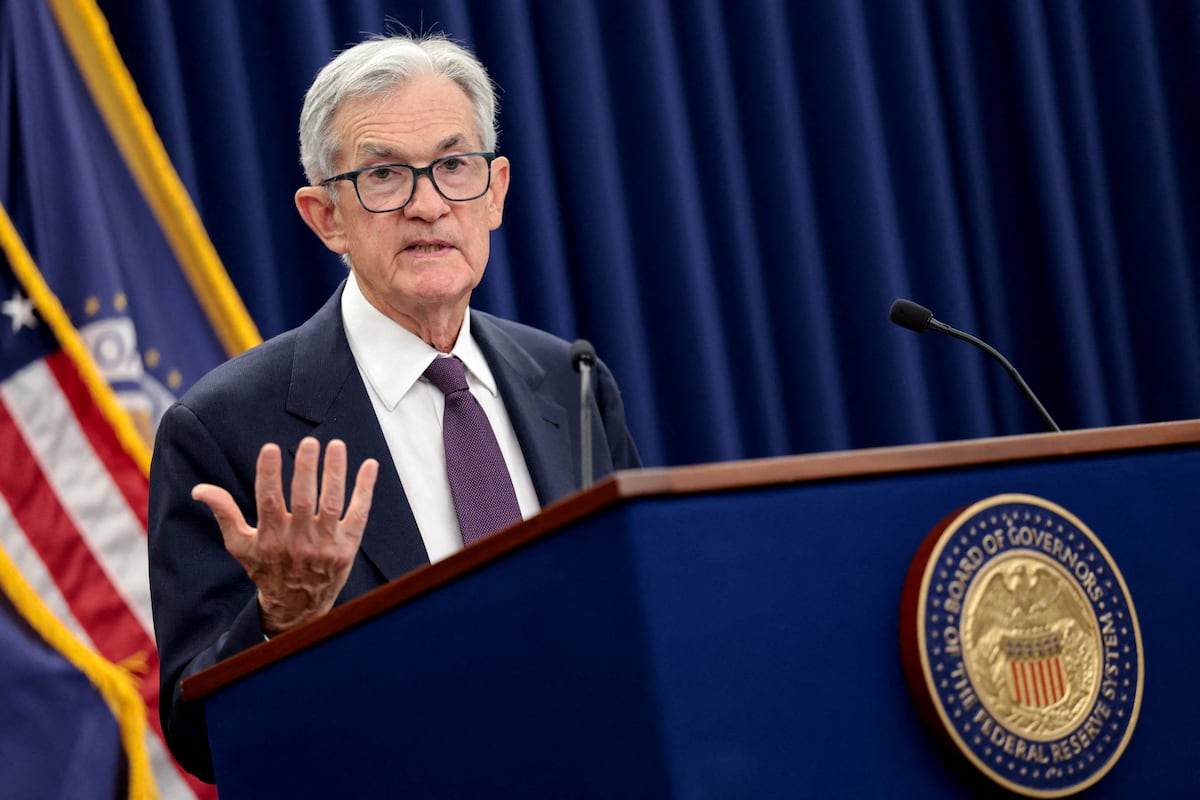
The Federal Reserve's policy committee meets to decide on interest rates during heightened uncertainty caused by Iran tensions and a blockade of the Strait of Hormuz, through which a fifth of global oil passes. The economic outlook presents mixed signals with stable inflation at 2.4%, rising inflation expectations, and weakening labor market indicators. The duration of the oil blockade will determine economic impact—a quick resolution may cause minimal disruption, while prolonged blockade could force the Fed to consider rate increases rather than cuts. Most economists expect the Fed to adopt a cautious stance and await developments before making significant policy changes.
"The war with Iran was expected to last four or five weeks, but Tehran's reaction—a blockade of the Strait of Hormuz, the waterway through which a fifth of the world's oil passes—has triggered a surge in energy markets. U.S. President Donald Trump insists the attacks will soon cease, but he is asking allies for help in securing this strategic Middle Eastern passage, while analysts speculate about how long the oil blockade will last."
"The key lies in how long the pressure on oil prices will last. Or, to put it another way, how long Tehran can keep the Strait of Hormuz blocked. A quick solution might leave few economic repercussions, but if it drags on for several more weeks, it will cause lasting damage to the economy and open the door to further disruption, forcing central banks to no longer debate whether to cut interest rates further, but whether they need to raise them instead."
"Central bankers must make decisions with the Iran war on the table, but also with an economy showing mixed signals, expectations of rising inflation, and a labor market exhibiting clear signs of weakness."
#federal-reserve-policy #iran-tensions-and-oil-markets #interest-rate-decision #economic-uncertainty #inflation-and-labor-market
Read at english.elpais.com
Unable to calculate read time
Collection
[
|
...
]