""What do you mean?" I asked after saying yes. I hadn't thought about my answer; I hadn't needed to. But it was true, it occurred to me seconds after, that increasingly, the idea of leaving was gaining some real cultural purchase. "I'm just hearing more people I know talk about it," my friend continued. "It does seem like things are getting worse than they've been.""
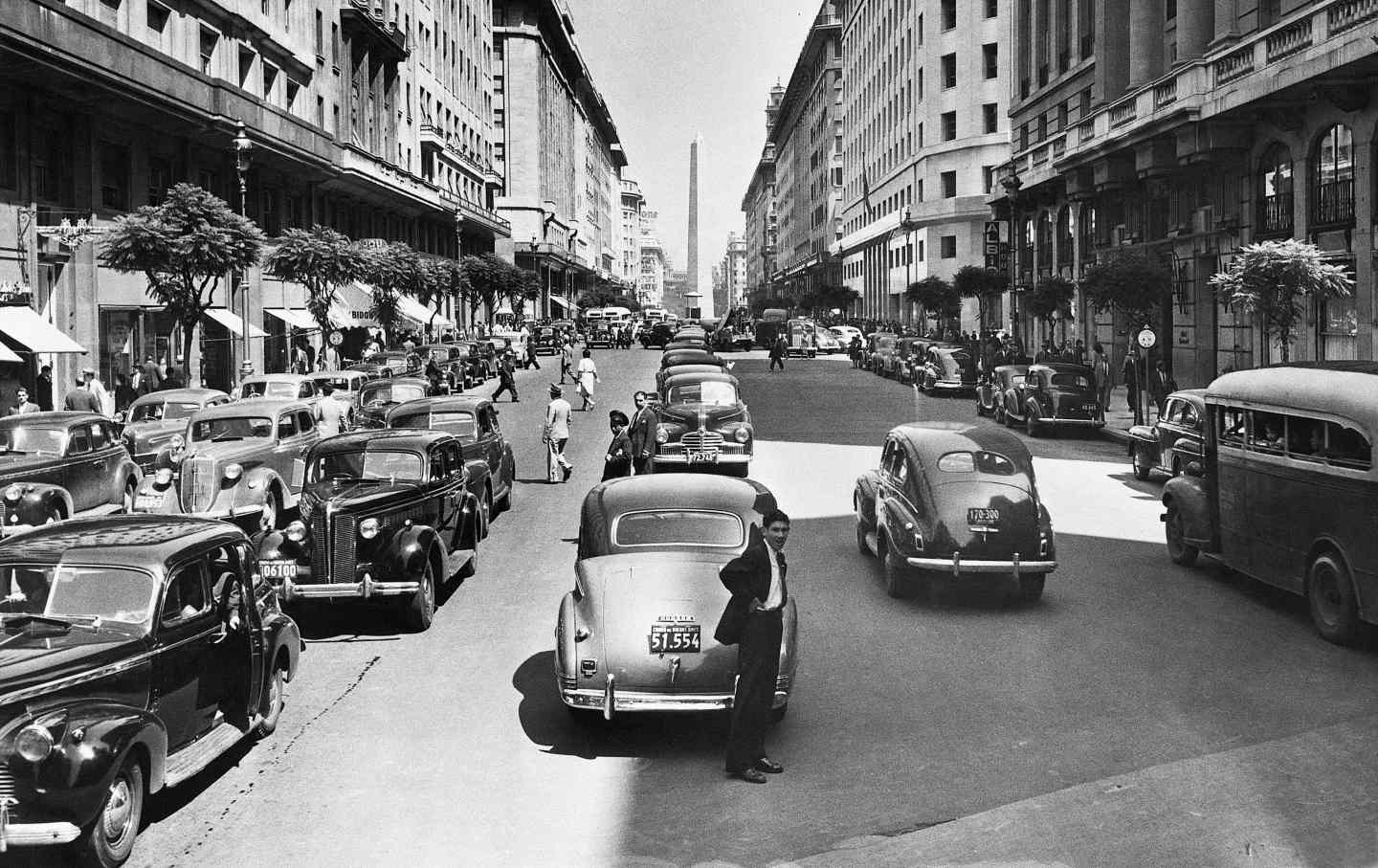
"My father's father got on a ship some time in the late 1940s bound for Buenos Aires, after war had left the town in Southern Italy where he'd been born decimated and impoverished. As family lore has it, he quit school when he was eight and on at least one occasion had to resort to making a meal from a single bell pepper stolen from a neighbor's garden."
One Thursday night in mid-September, amid a shooting, a late-night host's removal, and escalating violence in Gaza, a friend asked whether New York City and the United States were still the right place to live. That question revealed that conversations about leaving were becoming more common and that the idea of leaving was gaining cultural traction. A strong family pattern of migration shaped that impulse: relatives repeatedly left Europe and Argentina for new lives in the Americas. A grandfather boarded a ship for Buenos Aires after his Southern Italian hometown was decimated by war, later marrying, raising children, and learning to read in Argentina, while other relatives emigrated to the United States and achieved professional success.
Read at The Nation
Unable to calculate read time
Collection
[
|
...
]