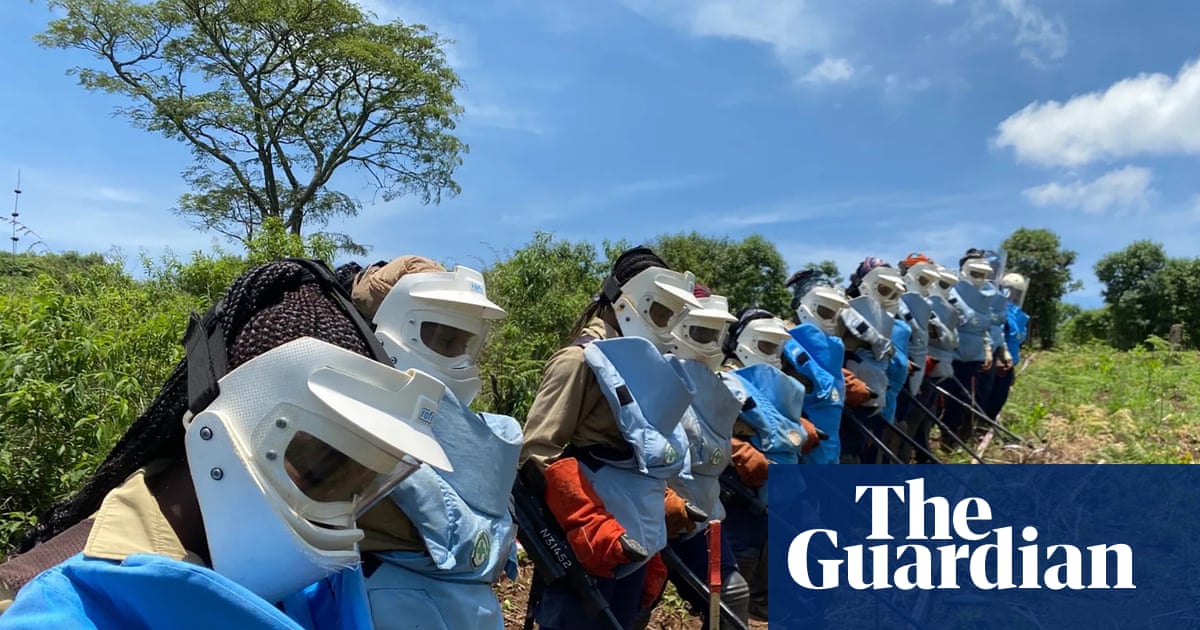
"Ten days before schools reopen for the summer term in eastern Zimbabwe, Hellen Tibu is worried about how she will pay the fees for her sister's education. The 22-year-old landmine-disposal expert smooths the creases from her younger sister's uniform as it hangs on the washing line outside a relative's rooms in Sakubva, a densely populated township in Mutare. The shirt is faded around the collar and a new one is needed."
"The Zimbabwe-Mozambique frontier is littered with millions of landmines, which were laid between 1976 and 1979 by the former Rhodesian regime during the country's liberation war. In some areas, there are believed to be 5,500 mines for every kilometre. More than 1,500 people have been killed or maimed by mines since Zimbabwe gained its independence in 1980, while farmers have lost an estimated 120,000 animals."
"Tibu is one of the female deminers at Apopo, who made up more than 30% of the organisation's staff in Zimbabwe. Apopo, which says it received 90% of its income from the US state department's weapons removal office, sent most of its staff home last February after the Trump administration halted funding. It shut down completely in June."
Hellen Tibu, a 22-year-old landmine-disposal expert from Sakubva in Mutare, lost her job after an international demining organisation closed. The organisation depended on US state funding for the majority of its income and sent most staff home when that support stopped, then ceased operations in June. The Zimbabwe-Mozambique border remains heavily mined with millions of mines laid in the 1970s, causing over 1,500 casualties and heavy livestock losses. Female deminers formed more than 30% of the workforce. Job losses have left households unable to pay school fees, rent, or basic living costs.
Read at www.theguardian.com
Unable to calculate read time
Collection
[
|
...
]