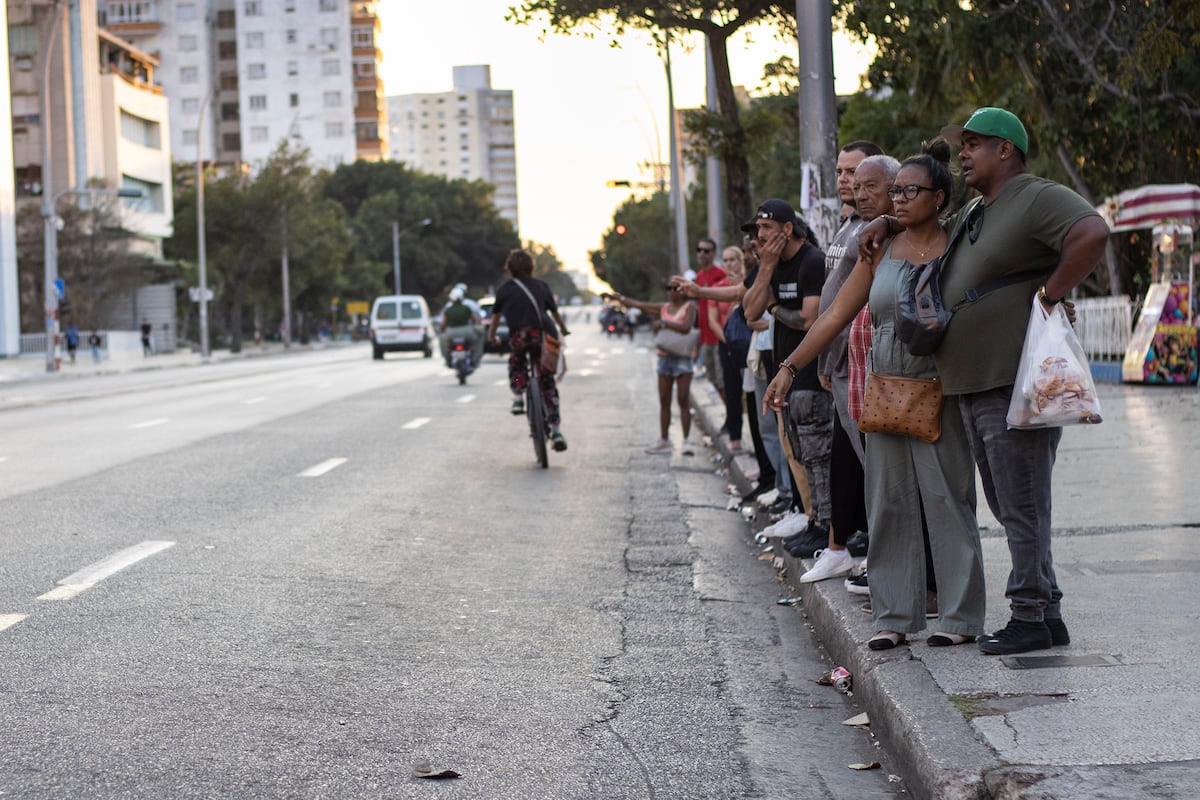
Havana is experiencing an unprecedented energy crisis exacerbated by U.S. tariff threats on fuel suppliers. Streets are filled with garbage smoke, ships are absent from the harbor, and transportation has become extremely difficult and expensive. Citizens employ various makeshift transportation methods including classic cars, government minibuses, motorized tricycles, bicycles, motorcycles, and horse-drawn carriages. People wait extended periods—15 minutes to over an hour—for any available transport to reach work, medical appointments, or home. Food scarcity, particularly chicken, remains unaffordable for most Cubans amid soaring prices. The population experiences daily uncertainty and hopes for change, with many believing this crisis is unprecedented in Cuban history.
"Taking a taxi in Havana is an increasingly difficult mission, growing more complicated and expensive from one day to the next as drivers run out of the rationed gasoline they receive. When you say taxi, you might find an almendron—a classic car used for public transportation—a gacela—one of the government's yellow minibuses—a cocotaxi—a motorized tricycle with a shell—a bicitaxi—a man pedaling for tourists under an umbrella—a motorcycle, an electric tricycle, or even a horse-drawn carriage."
"Getting on anything that will take you to work, back home, to the doctor, or to an appointment means walking for miles or joining groups of people waiting for an indeterminate amount of time, but no fewer than 15 minutes and up to an hour or more, under a tree, next to a bridge, or on a street corner."
"Cubans are hoping for transportation and food every day, entangled in a web of obstacles to find chicken, for example, at a price they can afford amid soaring prices. But they're also hoping to get somewhere else, or that something will happen soon, or that there will be some kind of change, almost any change, because the idea that something irreversible is happening in this crisis is starting to take hold."
Read at english.elpais.com
Unable to calculate read time
Collection
[
|
...
]