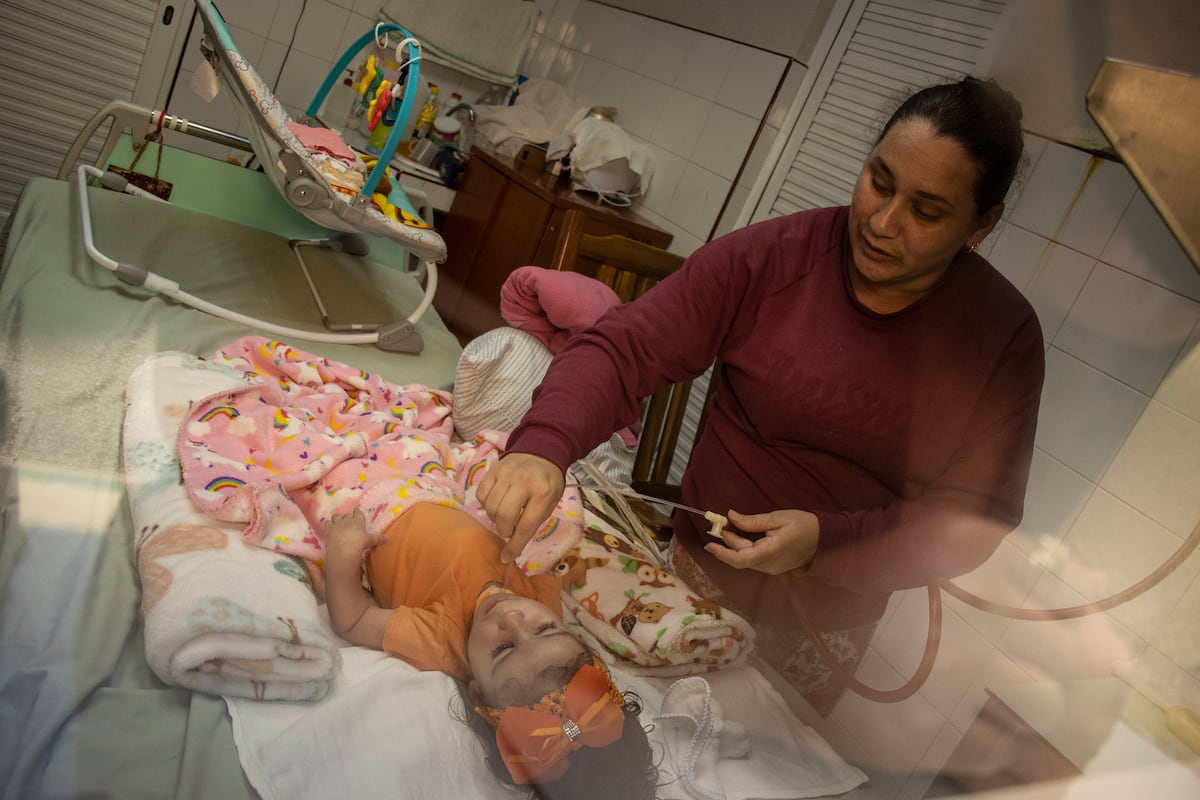
"No one could imagine that Jeisel Hernandez would die in the night, at the age of five, far from home. Just before dawn on December 10, there's a terrifying noise: a chorus of stunned voices reverberates around the progressive care unit of the Pepe Portilla Pediatric Hospital, in the province of Pinar del Rio. In one of the rooms, Yarisleidy Ramos and Alianys Labrador the mothers of two girls admitted to the ward wake up startled."
"In October, the blackouts in their neighborhood of Los Palacios were like those across almost all of Cuba: a black blanket that cast a shadow over the lives of the residents. This impacted Jeisel's quality of life. As a patient with type 1 spinal muscular atrophy also known as Werdnig-Hoffmann disease he desperately needed electricity to live."
"The inverter and batteries had begun to fail. The boy's body was turning red from the heat; his food was spoiling because the fridge wasn't working. His mother was finding it difficult to use the suction device to remove his saliva. And Jeisel's ventilator couldn't possibly be without power. So, on October 25, Hernandez packed a bag and left her house for the hospital, the place she never wanted to be."
A five-year-old boy, Jeisel Hernandez, who suffered from type 1 spinal muscular atrophy, died after being hospitalized due to prolonged power outages. The family in Los Palacios faced repeated blackouts that caused in-home medical equipment failures, spoiled food, and unbearable heat for the child. His mother lived at the hospital from October 25 to keep him alive because inverters and batteries were failing and the ventilator could not run without reliable electricity. On December 10, Jeisel was found unresponsive at the hospital and later died, leaving the family in deep grief.
Read at english.elpais.com
Unable to calculate read time
Collection
[
|
...
]