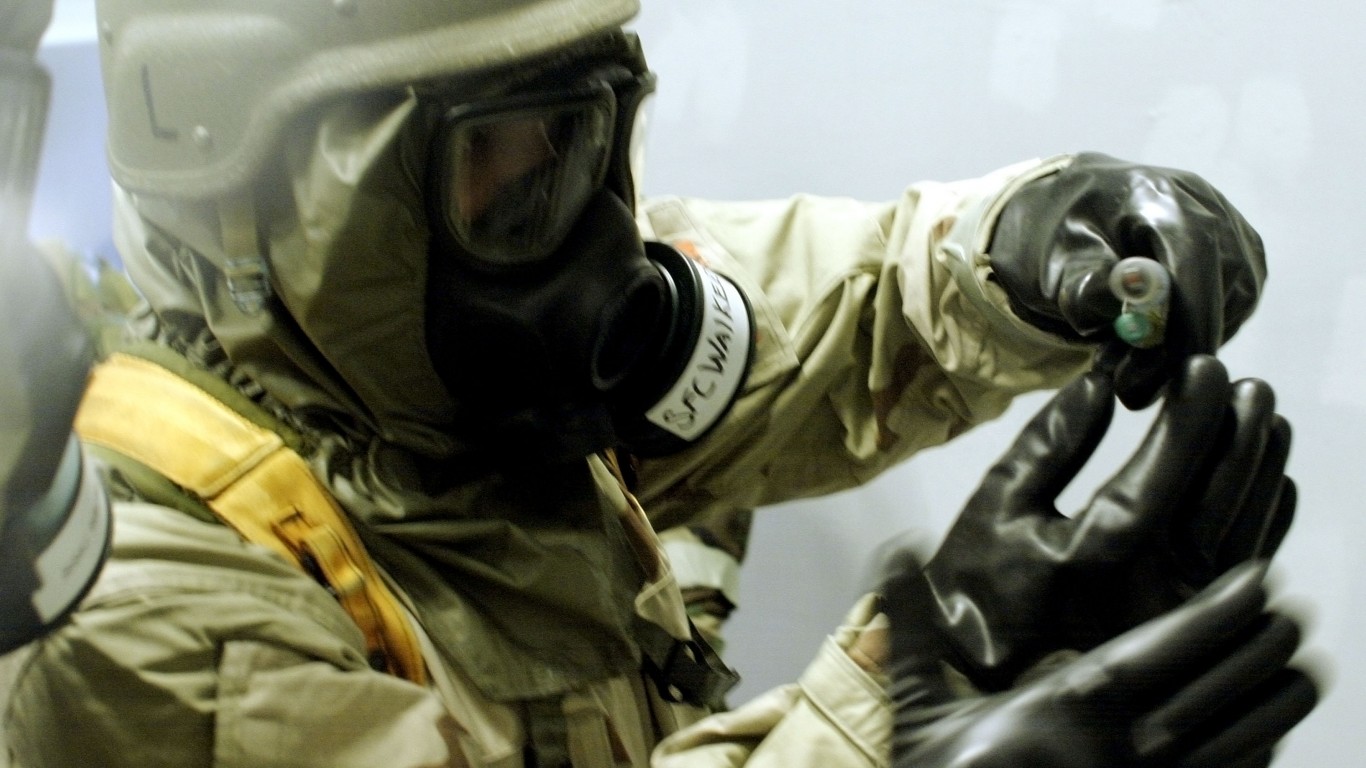
"The possibility of a chemical weapons comeback isn't just a military concern; it's also a political, ethical, and humanitarian one. Even limited use can have devastating consequences for troops, as well as civilians. They can also have long-term impacts on environments and public health. This article examines whether chemical weapons could realistically reemerge in modern conflict. We cover what factors might enable their return, and why understanding this threat is important today."
"A chemical weapon is a device intended to kill or injure people by disbursing toxic chemicals. They are considered weapons of mass destruction, along with nuclear or biological weapons, because they are intended to inflict large numbers of casualties. Chemical weapons injure by irritating the eyes and lungs, creating blisters and burning the skin, causing internal bleeding, blindness, vomiting, convulsions, paralysis, confusion, loss of consciousness, or death."
Chemical weapons were used from World War I through more recent attacks and are banned by international agreements because of their horrific effects. Allegations of recent use, advances in chemistry, and evolving geopolitical tensions keep the threat active. Even limited use can cause devastating immediate casualties among troops and civilians and create long-term environmental and public-health harms. Preventing resurgence requires identifying which countries could develop such capabilities and allocating resources for national defense accordingly. Chemical agents cause a range of injuries including respiratory distress, skin blistering, internal bleeding, neurological effects, and death.
Read at 24/7 Wall St.
Unable to calculate read time
Collection
[
|
...
]