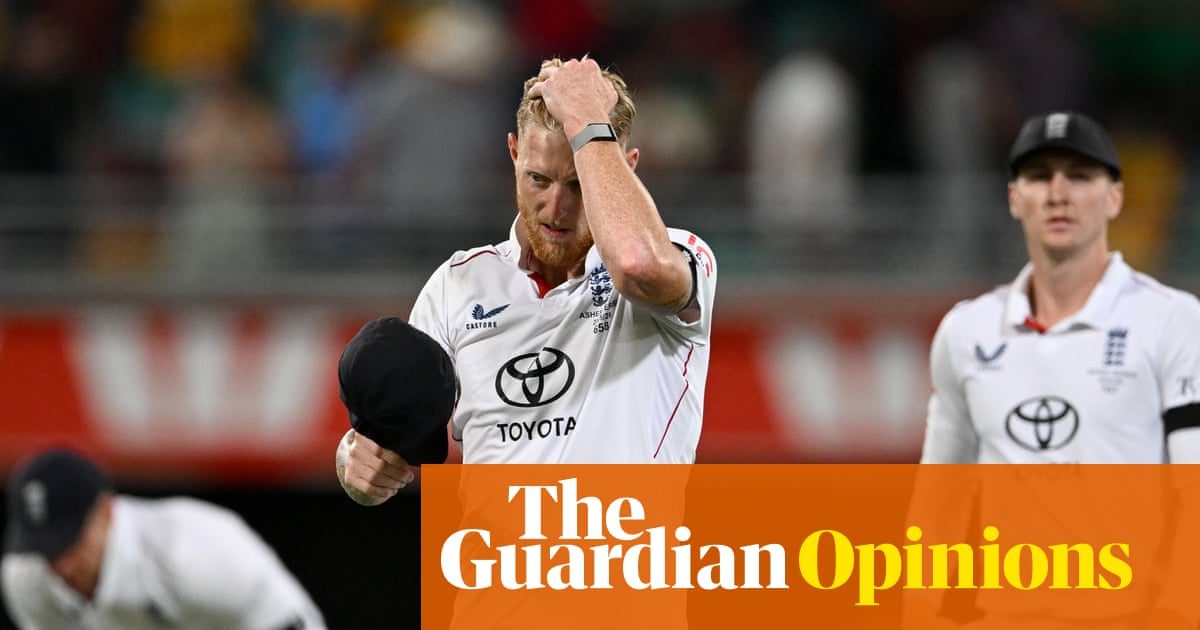
"We know how this goes from here, don't we? We know this cycle. The days since England's defeat in Brisbane have boiled down to a real-time competition to become the hate-click boss, to describe in the most sensual, eviscerating detail the depth of England's badness, not just at cricket, but at the molecular, existential level. Right now everything is turned up to 11. Bring on the flamethrowers."
"Scour this filth from the earth. It's time to burn this Baz-house down. So we have pitch maps of shame, fifth-stump drive montages, deconstructions of the basic energy at the Gabba, when even the players' faces seemed to collapse, from handsome, alpha dogs romping out in mid-afternoon, to weak-chinned lost souls under the evening lights, eyes hollow, hair straggly, like acid casualties at Woodstock."
"What will its epitaph be? The current favourite is Brendon McCullum's post-match TV interview, an experience that felt, in the moment, like having burning hot kebab skewers made entirely from vibes and golf driven into both eyeballs. Even as McCullum said the thing If anything we overprepared you could almost hear the clank of belts being loosed, steak knives sharpened. There it is."
England's defeat in Brisbane provoked an intensified wave of denunciation that prioritised spectacle and moral panic over considered diagnosis. Media and public reaction leaned into grotesque imagery, montage-driven humiliation, and hyperbolic caricatures of players' demeanour. Brendon McCullum's post-match remarks crystallised as a symbol of perceived hubris and overpreparation. The prevailing impulse was purge and reversion to past certainties rather than targeted reform. A different approach would combine clear analysis of failures with concrete proposals for improvement and draw on informed, practical expertise instead of reflexive denunciation.
Read at www.theguardian.com
Unable to calculate read time
Collection
[
|
...
]