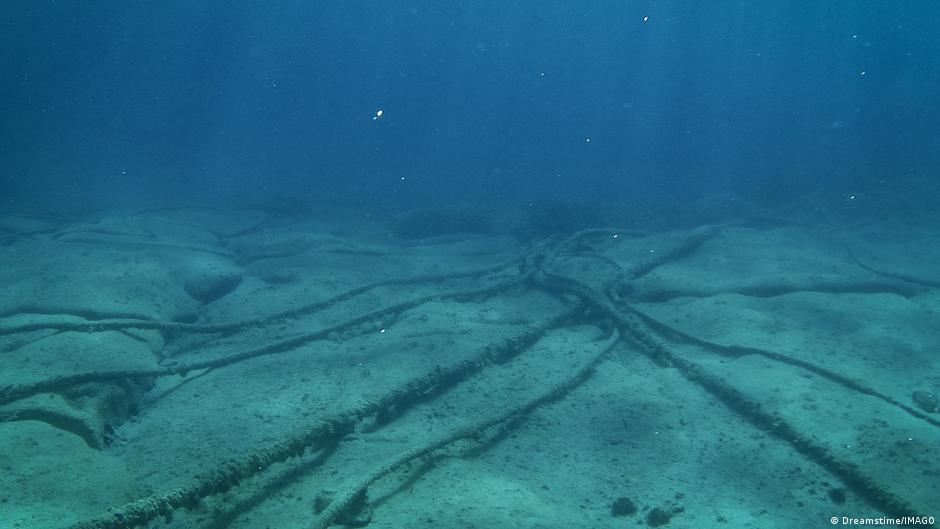
""All of global data exchange flows through these cables," said Johannes Peters, the head of the Center for Maritime Strategy and Security at the Christian Albrechts University in Kiel. "The internet, payment orders, any kind of information you can think of, any kind of spoken communication, it runs almost exclusively through these cables," Peters told DW. "On a global level, we are dependent on them.""
"But these communication networks are increasingly seen as targets for potential sabotage. The danger has been made plain by an ongoing series of incidents in the Baltic Sea. A study by the Washington University in Seattle found some 10 cables have been severed since 2022, including seven between November 2024 and January 2025, with additional incidents reported this summer. Russia was repeatedly named as a possible offender, based on recorded ship movements or anchor trails."
Undersea cables carry the vast majority of global data exchange and physically connect nations and continents, with nearly 500 cables totaling about 1.3 million kilometers as of 2021. These cables are increasingly perceived as potential sabotage targets after a series of incidents in the Baltic Sea. A Washington University study recorded roughly 10 cable severings since 2022, including seven between November 2024 and January 2025. Russia and China have been named as possible suspects in different incidents based on ship movements or anchor trails, but direct proof is lacking. Legal complications and regional vulnerabilities complicate repairs and raise connectivity risks.
Read at www.dw.com
Unable to calculate read time
Collection
[
|
...
]