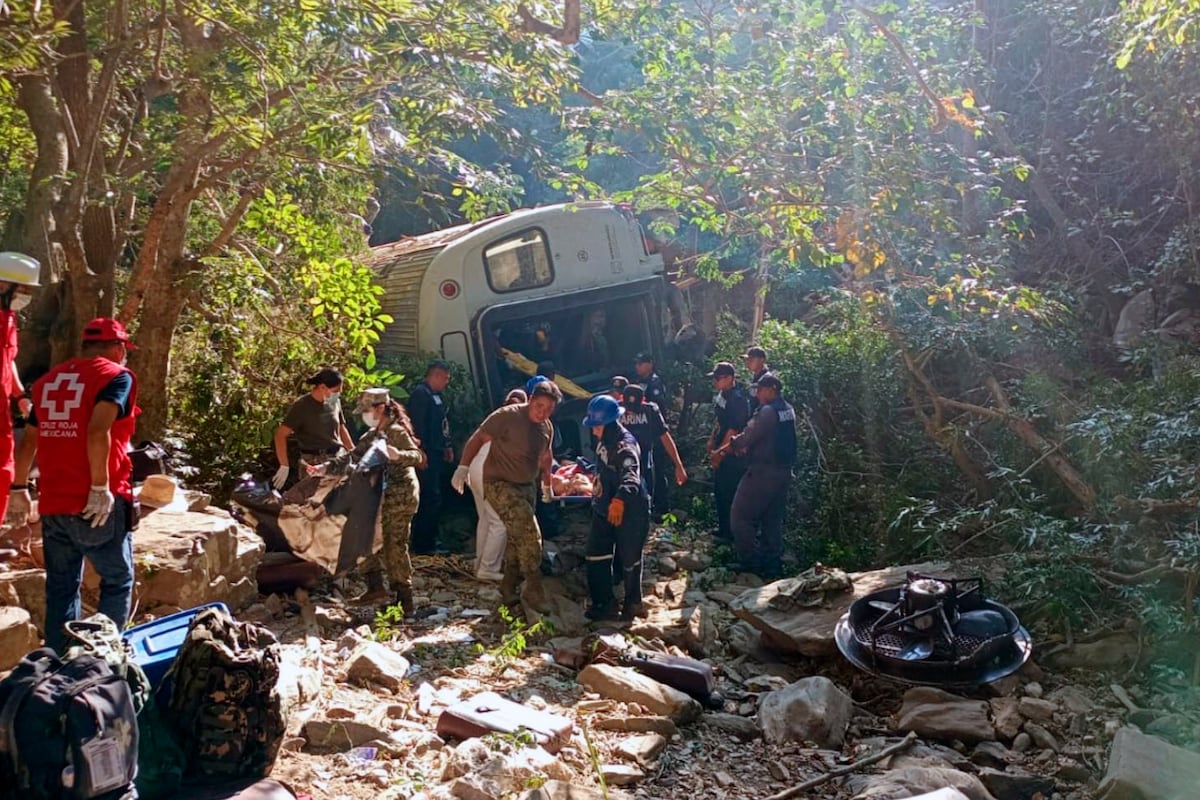
"With 250 people on board, the second locomotive derailed and dragged the rest of the train with it. One of the four passenger cars plunged into a six-meter-deep ravine, and another was left partially suspended. The accident resulted in the deaths of 13 people and left approximately 100 injured, 36 of whom are still receiving medical attention, according to a statement from the Mexican Navy."
"Vasquez, a psychology student, recalls boarding the train at the Ixtepec station at 9:00 a.m. Her destination was Chivela, the nearest stop where her father was waiting for her. From there, she planned to travel to the town of Motillas, where her grandparents live. During the trip, she was distracted, transferring data from her old cell phone to her new one."
"I heard them say they were scared because it was going so fast and it was even throwing the suitcases around. We were scared because of the speed on the curve. I felt it lurch and the weight shifted. It was a very sharp curve, almost a U-turn. I feel like it took it at a lot of speed. I couldn't think straight. There wasn't a jolt, it just went sideways, she recounts over the phone."
Katherine Vasquez, 21, survived the December 28 Interoceanic Train derailment near Nizanda, Oaxaca. The train carried about 250 people when the second locomotive derailed and dragged the rest of the train. One passenger car plunged into a roughly six-meter ravine and another remained partially suspended. Thirteen people died and about 100 were injured, with 36 still receiving medical attention according to the Mexican Navy. Vasquez boarded at Ixtepec at 9:00 a.m. en route to Chivela and planned to visit relatives in Motillas. She described distraction transferring phone data and a sudden sideways lurch on a sharp curve. The train had two locomotives and four passenger cars and operated on the Z line owned by the Mexican government.
Read at english.elpais.com
Unable to calculate read time
Collection
[
|
...
]