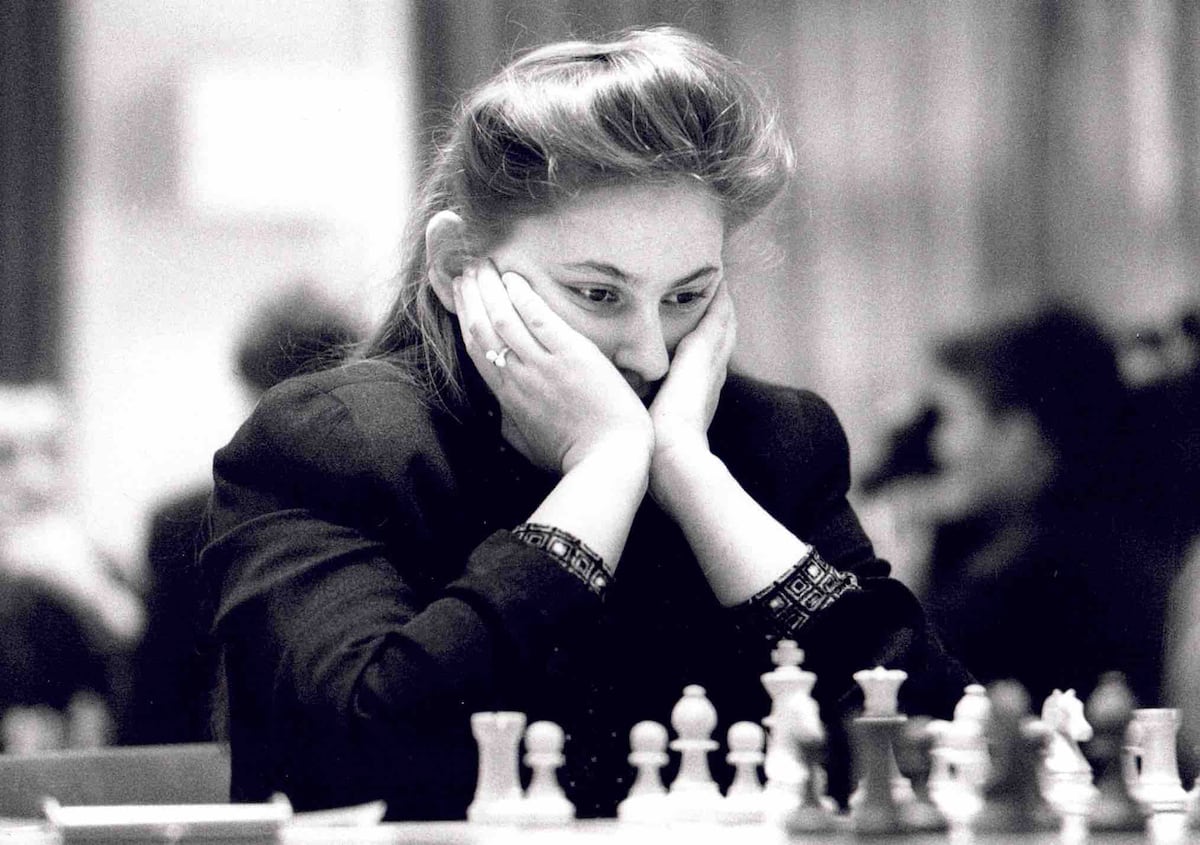
"Since the Spanish cleric Ruy Lopez de Segura became the first unofficial world chess champion in the 16th century, only one woman, Judit Polgar, has been among the world's top 10 players while there are few among the top 100. Having retired from playing tournaments in 2014, the 49-year-old Hungarian has intelligence, sympathy, and culture in spades. No one would guess she had never been to school, except for exams."
"Reviewing the lineups of the women's national teams, I was stunned to see four young girls in Hungary's lineup, which consisted of Susan Polgar, 19, Judit Polgar, 12, Sofia Polgar, 14, and Ildiko Madl. Three sisters on the team of a leading country in chess? I investigated, and I came face to face with a cracker of a story: the three of them had been guinea pigs in an experiment conducted by their parents, who home-schooled them with chess central to that education."
"Those four girls achieved something literally incredible: beating the Soviets to gold, which they had won for the past 30 years. Judit's individual performance was also an almost unrepeatable feat: 12 wins, a draw with the Soviet Levitina and no defeats. At 12 years old! You didn't have to be clairvoyant to predict that this girl was going to revolutionize chess."
Judit Polgar was the only woman to reach the world's top 10 players since the 16th century and retired from tournaments in 2014 at age 49. She never attended formal school except for exams. A Netflix documentary focuses on her chess success but omits her schooling and the scarcity of women in chess, where physical strength is irrelevant. In 1988 the Hungarian women's team included three young Polgar sisters and Ildiko Madl. The sisters were home-schooled by their parents with chess central to their education as an experiment. The team beat the Soviet champions after thirty years, and Judit scored 12 wins, one draw, and no defeats at age 12.
Read at english.elpais.com
Unable to calculate read time
Collection
[
|
...
]