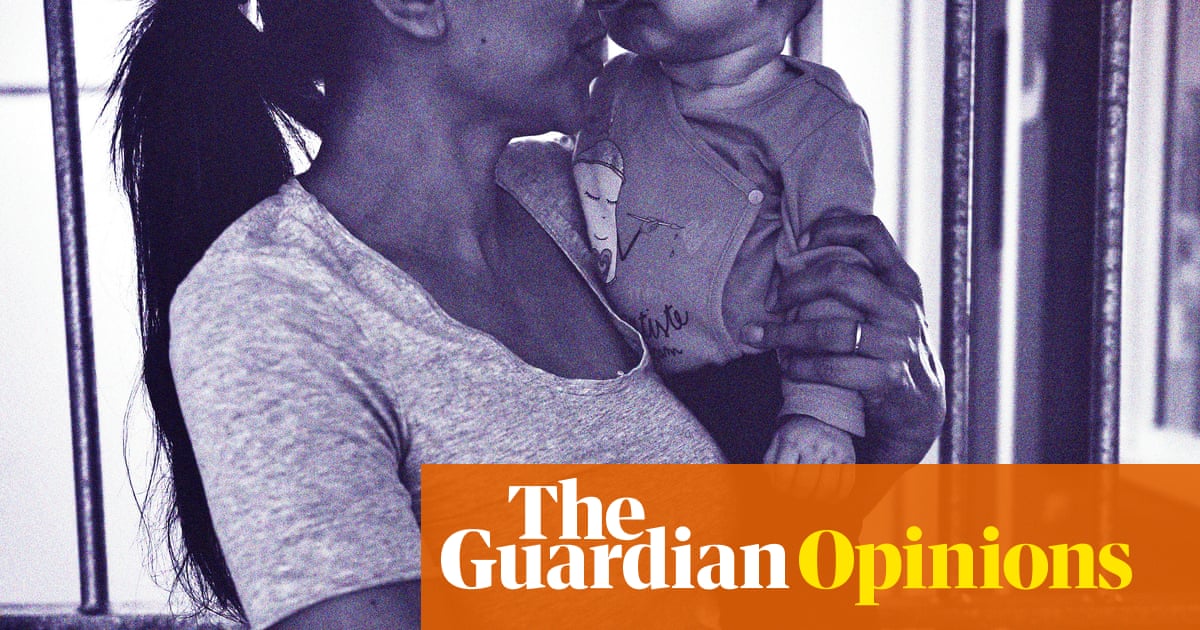
"When you imprison a woman, you imprison a family, a young woman in Sierra Leone told me, cradling her small baby in a damp cell. My mind flashed back to being a teenager, hearing my mother sob after receiving a phone call to say that my father had been arrested in Zambia for political reasons. I understand how children are collateral damage of imprisonment, and over 20 years as a lawyer, I know that is even more true when women primary caregivers are arrested."
"Bad girls is how society labels women in prison. But what if that label is a lie? The majority of women are imprisoned for non-violent offences, and my research, conducted by Women Beyond Walls and Penal Reform International over the past two years, shows that in most cases women are criminalised due to poverty, mental illness, abuse or discrimination. Half of all women in prison, as opposed to less than a third of men, have a drug dependence in the year before imprisonment."
Imprisoning women disrupts families and often makes children collateral damage, especially when primary caregivers are arrested. The majority of incarcerated women are jailed for non-violent offences linked to poverty, mental illness, abuse, or discrimination. Half of women in prison had drug dependence in the year before imprisonment, compared with less than a third of men. Women who commit violent crimes are frequently survivors of violence. Common causes of arrest include shoplifting to feed family, owing money, and hawking without licences. Drug-related incarcerations increase with poverty, coercion, police quotas, and the US-led war on drugs, particularly in Latin America and Asia.
Read at www.theguardian.com
Unable to calculate read time
Collection
[
|
...
]