"FGM involves the partial or total removal of the external female genitalia, which can have serious long-term health consequences, including infertility. It is generally carried out without anaesthesia by untrained cutters using non-sterile instruments such as knives, razor blades or pieces of glass, and girls are usually forcibly restrained. The practice is considered to be a grave violation of human rights and in 2012 the UN passed a resolution to ban it. Although is still practised in about 30 countries in Africa and Asia, FGM has no medical basis and is performed solely for cultural or religious reasons."
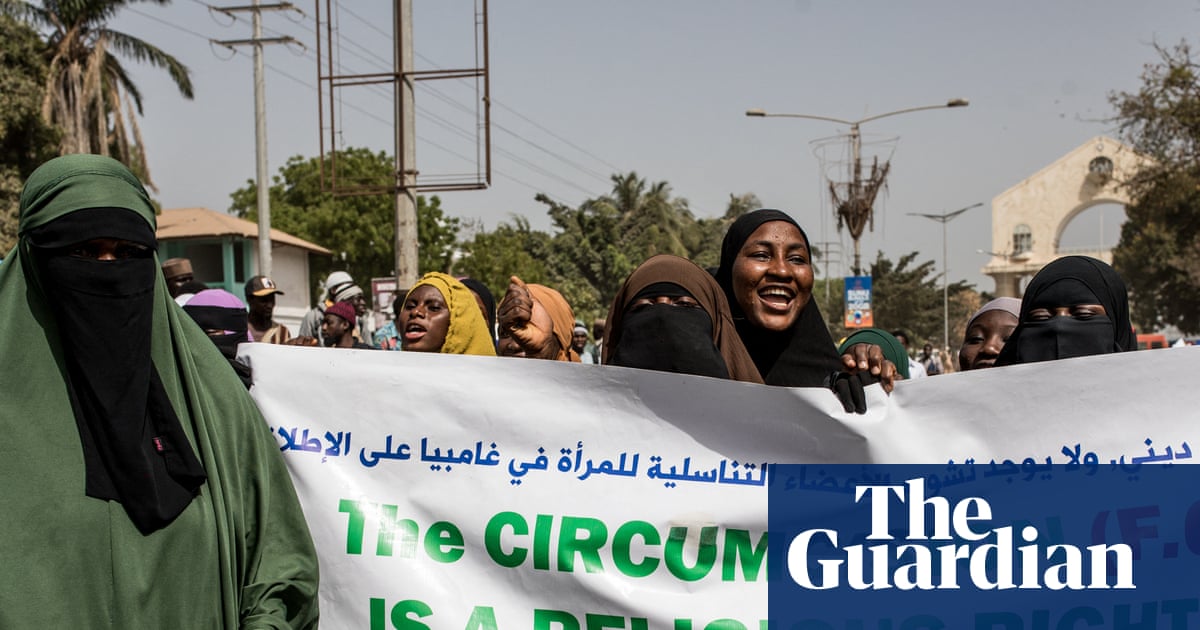
"A group of religious leaders and an MP in the Gambia have launched efforts to overturn a ban on female genital mutilation at the country's supreme court. The court case, due to resume this month, comes after two babies bled to death after undergoing FGM in the Gambia last year. The Gambia has one of the highest rates of FGM in the world. Almost three-quarters of women between 15 and 49 have undergone the practice and nearly two-thirds of them were cut before the age of five."
"Activists and lawyers see this as the latest move in a backlash against women's rights that is eroding gender protections across the world. Fatou Baldeh, founder of the Gambian rights organisation Women in Liberation & Leadership, said: FGM is a strong manifestation of violence against women that harms their physical and psychological health. If this issue is still being [debated at a national level], it shows us that women's rights are really regressing. This is not an isolated issue it's part of a global regression on women's rights."
Religious leaders and an MP have launched a supreme court challenge to overturn the Gambia's ban on female genital mutilation, with the case due to resume this month after two babies bled to death following FGM last year. MP Almameh Gibba previously tabled a bill to decriminalise FGM that parliament rejected in 2024. The Gambia records among the highest global FGM prevalence: almost three-quarters of women aged 15–49 have undergone FGM and nearly two-thirds were cut before age five. FGM involves partial or total removal of external genitalia, is performed without anaesthesia by untrained cutters using non-sterile instruments, carries serious long-term health risks including infertility, and is widely regarded as a grave human rights violation. Activists and lawyers view the legal challenge as part of a broader backlash eroding gender protections worldwide.
Read at www.theguardian.com
Unable to calculate read time
Collection
[
|
...
]