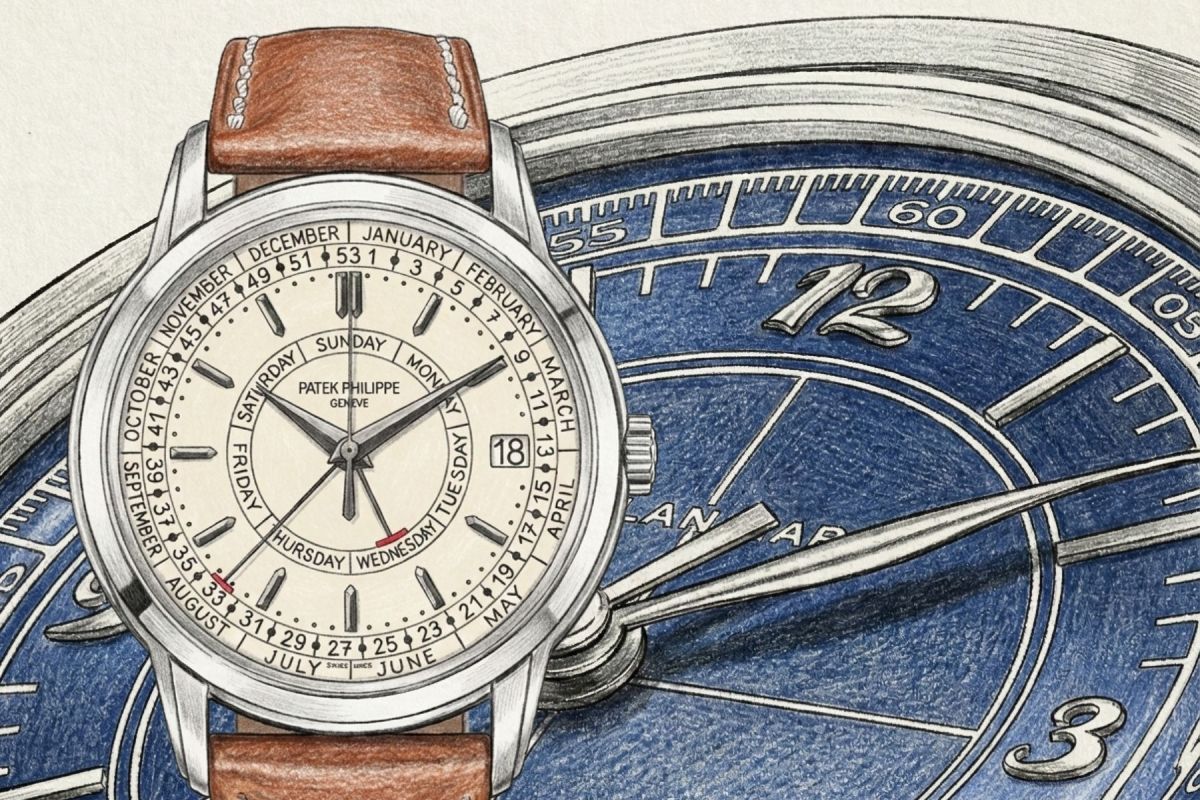
"Take the so-called "sector" or "scientific" dial. Organized into concentric "sectors" that divide the minute, hour and sometimes the subdivided seconds tracks into separate areas, they often (but not always) feature bisecting vertical and horizontal lines that create four equal quadrants. These aesthetically-distinctive dials originated on pocket watches in the early 20th century, carrying over the idea of the "railroad" minute track and merging it somewhat with the curvaceous, decorative geometry of the art deco movement."
"It was in the 1930s that sector dials truly came into their own. During an era when établissage - the assembly of parts produced by distinct specialists such as dial makers and case makers - still far outstripped the prevalence of in-house production, watchmakers would often share several key manufacturing partners. So it's little surprise that similar (if not nearly identical) sector dial watches emerged from famed marques such as Longines, Omega, the International Watch Company and others."
Sector dials organize minute, hour and sometimes subdivided seconds tracks into concentric sectors, often with bisecting vertical and horizontal lines that create four equal quadrants. The design prioritizes legibility through distinct tracks and a railroad-style minute track combined with Art Deco curves and geometric form. Sector dials originated on early 20th-century pocket watches and migrated to wristwatches after the First World War as men's wristwatches became common. The Bauhaus movement and modernist aesthetics influenced the angular simplicity. By the 1930s sector dials flourished, and shared manufacturing networks produced similar examples across brands such as Longines, Omega and IWC.
Read at InsideHook
Unable to calculate read time
Collection
[
|
...
]