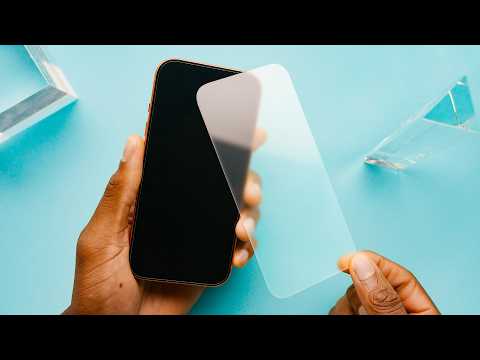
Claims of improved smartphone glass often present shatter resistance and scratch resistance as simultaneously increasing, but the properties are inversely related. Increasing scratch resistance requires harder glass, which raises brittleness and makes shattering more likely. Increasing shatter resistance requires softer glass, which reduces brittleness but increases susceptibility to scratches. Improvements therefore tend to alternate between the two characteristics rather than progress together. Gorilla Glass generations show this pattern, with changes alternating between shatter resistance and scratch resistance. Ceramic Shield follows a similar alternation, with iPhone 12 emphasizing shatterproof performance and later versions emphasizing scratch resistance. Drop outcomes also depend on device design factors like display shape, bezel thickness and material, and edge geometry, not only glass.
"To make glass more scratch resistant, you make it harder, but this increases brittleness and susceptibility to shattering. To make it less brittle and more shatter resistant, you make it softer, which makes it more susceptible to scratches. You can optimize for one or the other, but dramatically improving both simultaneously is essentially impossible."
"Companies never explain what "three to four times more shatter resistant" actually means, and they omit that improving one property likely means sacrificing the other. Looking at Gorilla Glass's history from generation 1 to 9, the improvements have alternated between shatter resistance and scratch resistance improvements year after year. This creates the illusion of continuous overall improvement when the reality is two separate curves trading off against each other."
"Most modern smartphones use Gorilla Glass from Corning or similar materials like Apple's Ceramic Shield. Ceramic Shield debuted with the iPhone 12 as four times more shatterproof, and Ceramic Shield 2 with the iPhone 17 is three times more scratch resistant. The pattern is identical."
"Independent YouTube tests often verify these claims, but they attribute all durability improvements to the glass alone. However, many other factors significantly impact whether a phone screen shatters on a drop: the shape of the display, thickness and material of bezels, and whether edges are flat or curved. The iPhone 12's return to flat sides versus the iPhone 11's rounded design had a huge impact on shatter resistance, but Apple credits this entirely to the glass in their marketing claims."
Read at YouTube
Unable to calculate read time
Collection
[
|
...
]