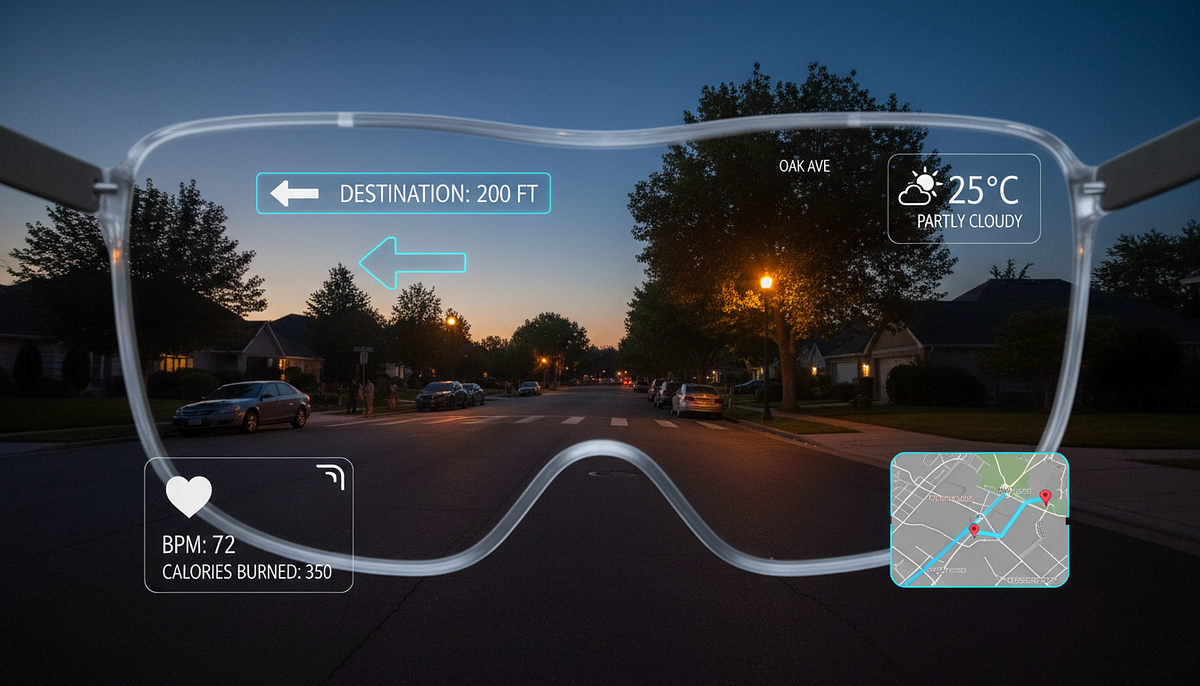
"The most basic function right now is using them as a second screen. Connect to your phone and you can watch movies or play games on a larger display without needing a physical one."
"Most modern AR glasses use waveguide technology - a thin, transparent optical layer that directs light from a tiny projector into your eyes while still letting you see the real world."
"Using a combination of cameras, motion sensors, and AI-powered algorithms, AR glasses build a 3D map of your physical environment."
"As they do, accessibility is going to matter more. We can imagine basic features like text reading and speech-to-text being built in."
Recent advancements in AR glasses by companies like XREAL and Meta have led to lighter, more comfortable designs compared to traditional VR headsets. These glasses can function as a second screen, allowing users to connect to their phones for entertainment. Key components include a display system using waveguide technology and a combination of cameras and sensors for spatial mapping. As technology evolves, accessibility features will become increasingly important, prompting creative approaches to enhance user engagement and interaction with the augmented reality experience.
Read at Medium
Unable to calculate read time
Collection
[
|
...
]