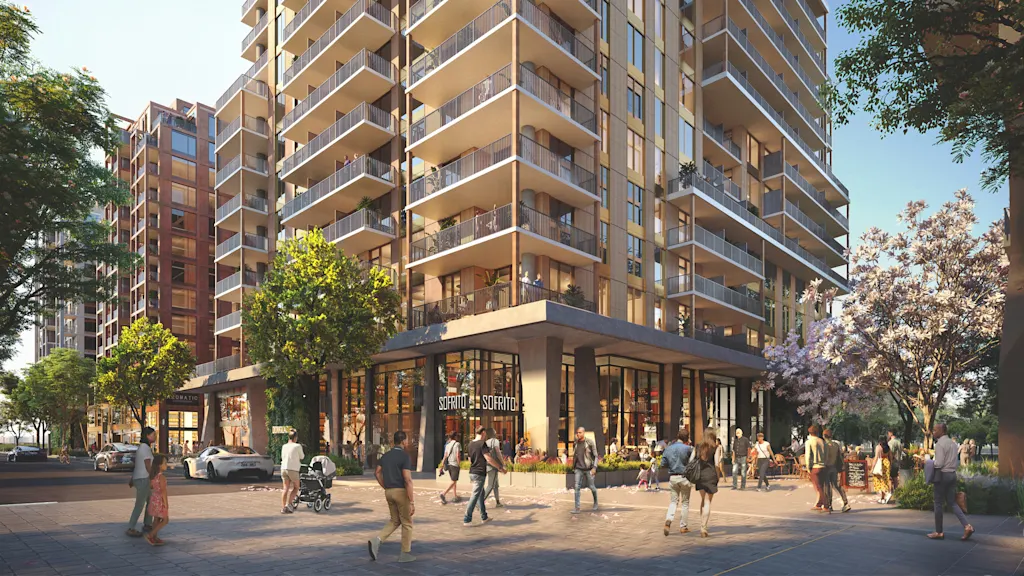
A mixed-use complex in Washington, D.C., captures waste heat from commercial tenants to supply apartment hot water. A solar-powered brewery on-site diverts excess hot water through a heat exchanger that transfers heat to the residential hot water loop without mixing the waters. At full brewery operation and full occupancy of 757 units, roughly 60–70% of domestic hot water heat can come from the brewery. The system can also recover heat from other businesses, such as grocery refrigeration. Rooftop solar, all-electric buildings, and a transit-oriented location further reduce energy use and support net-zero carbon goals while lowering residents' utility bills.
"Atlas Brew Works, a solar-powered brewery that serves craft beers, moved into the building in November. At most breweries, the heat that's generated from the brewing process would be vented outside. But in the new building, any hot water that the brewery doesn't reuse is sent into a heat exchanger, which transfers heat to the hot water loop for the apartments. (The water itself never mixes; tenants are not showering in brewery water.)"
"When the brewery is operating at full capacity and the complex's 757 apartments are fully occupied, around 60% to 70% of the heat for the apartments' hot water can come from the brewery. The complex is also designed to be able to harvest heat from other businesses. A small grocery store that will soon open can share waste heat from its refrigerators, for example."
Read at Fast Company
Unable to calculate read time
Collection
[
|
...
]