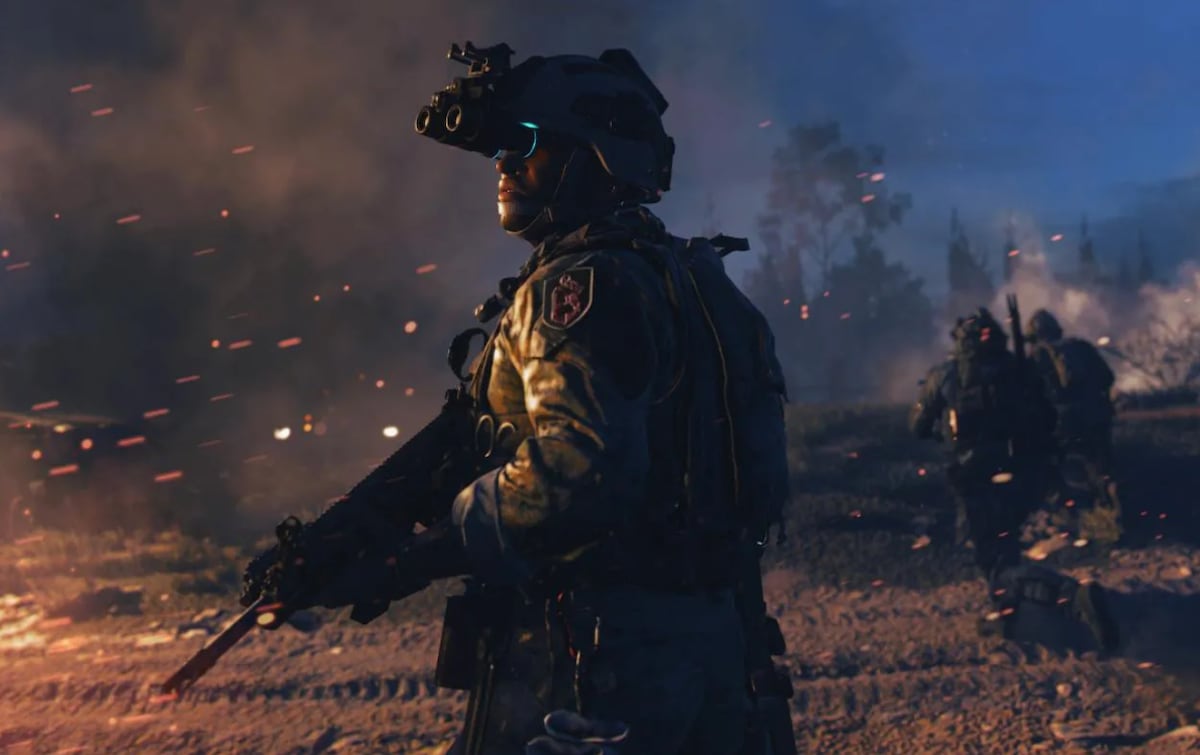
"The story presented the Federationa fictional alliance of South American countries whose capital was Caracasas a military superpower that becomes the main enemy of the United States. At the time, this narrative choice sparked considerable controversy in Venezuela, where the newly elected president, Nicolas Maduro, considered that the game was associating his country with a global military threat and symbolically positioning it as an antagonist."
"But the truth is, it's perhaps more useful to invoke Occam's razor: given the thoroughness with which the Activision saga has blended reality and fiction, it was only a matter of time before one of its games predicted a future war or military event. There haven't been other controversies comparable to what happened in Venezuela with Call of Duty: Ghosts, but other installments in the series (such as Modern Warfare, Black Ops and Warzone) have generated controversy in other countries or geopolitical contexts."
Call of Duty: Ghosts (2013) depicted a fictional South American Federation with Caracas as its capital and cast it as a military superpower opposing the United States. That narrative choice provoked controversy in Venezuela, where President Nicolas Maduro accused the game of associating his country with a global military threat and positioning it as an antagonist. Some view the game series as a form of predictive programming, introducing wartime ideas through cultural products, while a simpler explanation is that the franchise routinely blends real geopolitics with fiction, making apparent predictions likely over time. Other installments and franchises have similarly generated controversy and often adopt a pro-military tone.
Read at english.elpais.com
Unable to calculate read time
Collection
[
|
...
]