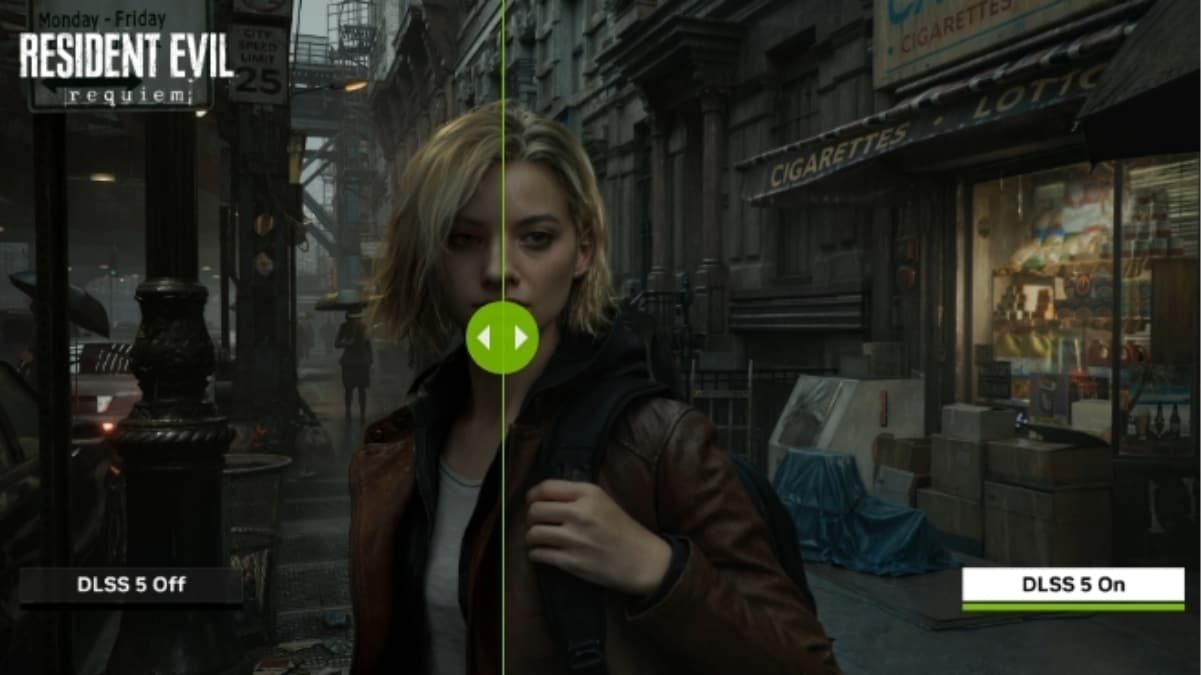
"Nvidia described DLSS 5 as a 'real-time neural rendering model' that adds photoreal lighting and materials to scenes. Put simply, the company is using AI not just to reconstruct or generate frames, but to infer how surfaces, objects, and characters should look under more realistic lighting conditions while the game is running."
"DLSS 5 uses real-time neural rendering to change how light, materials, and surfaces appear on screen, pushing game visuals closer to what the company calls 'photoreal' graphics. Nvidia says the goal is to bridge the gap between conventional game rendering and Hollywood-style cinematic visual effects."
"Within hours of Nvidia's demos going live, social media users began trolling the feature, arguing that it made characters look uncanny, overly airbrushed, or similar to the kind of AI beauty filters already common in photo apps. Critics also raised a broader concern that if the technology is altering how a game looks beyond resolution and frame rate, where does that leave the original artistic direction set by developers?"
Nvidia unveiled DLSS 5 at GTC 2026, marking a significant shift from previous versions that focused on upscaling and frame generation. DLSS 5 employs real-time neural rendering to infer how surfaces, objects, and characters should appear under realistic lighting conditions during gameplay. Rather than simply reconstructing frames or improving resolution, the technology actively modifies visual appearance to achieve photorealistic graphics comparable to cinematic effects. This approach has sparked considerable debate in the gaming community, with critics questioning whether AI-driven visual alterations compromise original artistic direction and expressing concerns about unnatural character appearances resembling AI beauty filters.
#dlss-5 #ai-neural-rendering #photorealistic-graphics #game-visual-fidelity #artistic-direction-concerns
Read at Gadgets 360
Unable to calculate read time
Collection
[
|
...
]