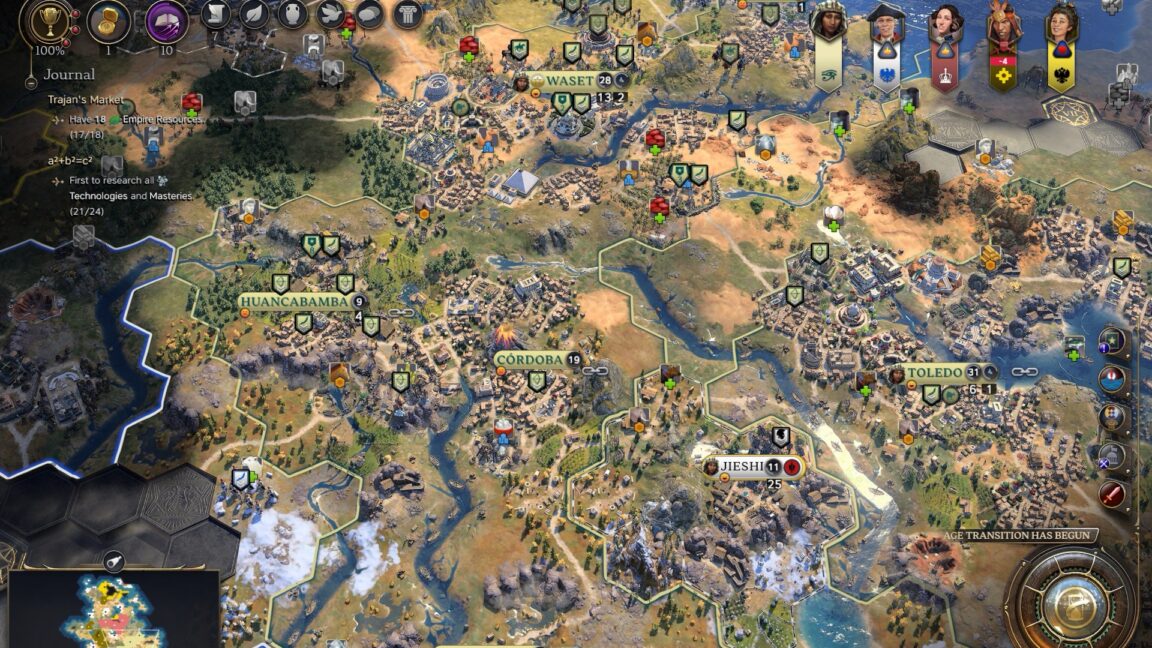
Civilization 7 introduced a system where players could change civilizations twice during a game, which led to criticism that the game no longer focused on building a civilization to last. A major update titled “Test of Time” reworks key systems and reintroduces playing a single civilization from beginning to end while retaining some of the concepts introduced at launch. The update also builds on the game’s structure of three ages—Antiquity, Exploration, and Modern—each with its own tech and culture trees and mechanics. The age system was intended to address long-standing balance and pacing issues found in traditional Civilization games.
"Civ 7 introduced a new approach to play wherein players would change civilizations from their initial selection twice by the end of a game. Lots of players said, "Wait a minute: we're literally not building a civilization to stand the test of time anymore." After such a negative launch reception, longtime series fans began to wonder if the franchise itself would continue to stand the test of time."
"It's clearly not a coincidence that the new, major update for the game reaching players today is titled "Test of Time." It's a major reworking of several of the game's key systems, and it reintroduces the ability to play one civ from beginning to end while retaining some of the big ideas that defined Civ 7 at launch."
"Another major change to the game is that it has been broken into three distinct ages: Antiquity, Exploration, and Modern. Each has its own tech and culture tree, game mechanics, and, until now, civilizations to pick from. The intent behind it was to allow the game's designers to solve some longtime problems with how traditional Civ games could lag or have balance problems at specific stages."
Read at Ars Technica
Unable to calculate read time
Collection
[
|
...
]