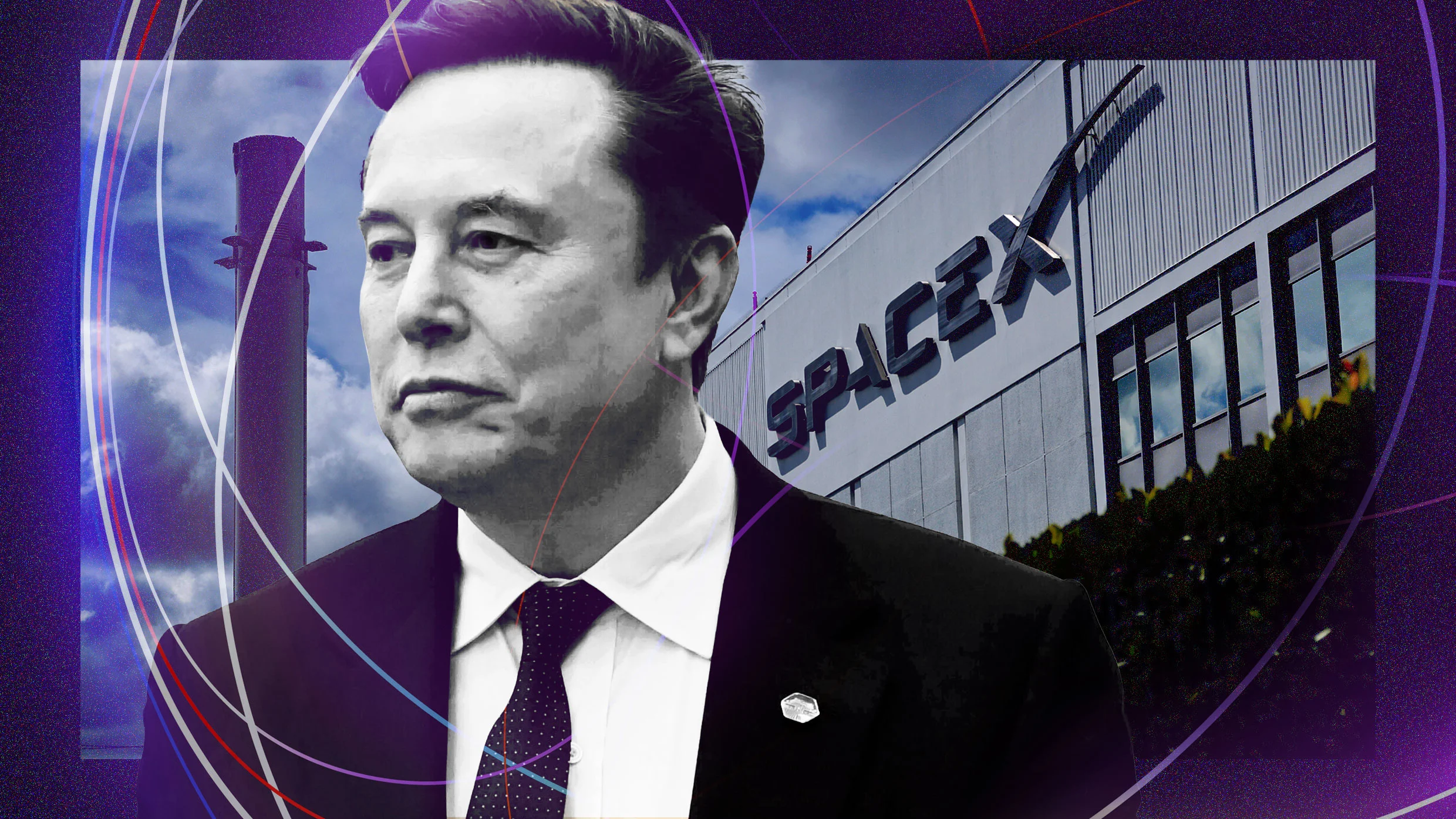
SpaceX’s planned IPO targets about $75 billion and an estimated valuation of $1.75 to $2 trillion. The valuation is presented as tied to a broad vision for space rather than current business fundamentals. The company frames its mission as extending consciousness to the stars and claims its efforts could enable new trillion-dollar markets on the Moon, Mars, and beyond. The private space era began with Falcon 1, and today only SpaceX and Rocket Lab deliver frequent, reliable orbital payload launches outside China and Russia. Launch capacity remains a major constraint, with SpaceX far ahead in launch volume and satellite delivery share, while Rocket Lab operates at much lower scale.
"SpaceX's upcoming IPO promises to be not only a watershed for the space industry, but a landmark in financial markets. The company-which includes the world's leading space-launch business, its largest satellite broadband provider, and a money-burning AI division-aims to raise about $75 billion, at an estimated valuation of $1.75 to $2 trillion."
"Only a decade ago, "the concepts of reusable rockets and low-cost miniaturized satellites were perceived as a bit of a curiosity," says James Bruegger, chief investment officer at space-focused Seraphim VC. "Now we're on the cusp of the biggest IPO in history being a space business.""
"The company's valuation is tied to a grand vision of space's future, rather than the fundamentals of SpaceX's business today. In SpaceX's IPO prospectus, the company states that its mission is nothing less than "to understand the true nature of the universe, and to extend the light of consciousness to the stars." Its current space efforts, it claims, could one day "lead to the emergence of new trillion-dollar markets on the Moon, Mars, and beyond.""
"Launch capacity remains a massive bottleneck The start of the private space era began 18 years ago, with the launch of SpaceX's Falcon 1 rocket. Today just two entities outside of China and Russia are delivering payloads into orbit frequently and reliably: SpaceX and Rocket Lab. There is an order of magnitude difference between them. SpaceX completed 165 orbital launches in 2025-accounting for nearly 51% of total launches worldwide and sending aloft 85% of all satellites last year. Rocket Lab had 21 successful launches, including orbital and suborbital missions."
Read at Fast Company
Unable to calculate read time
Collection
[
|
...
]