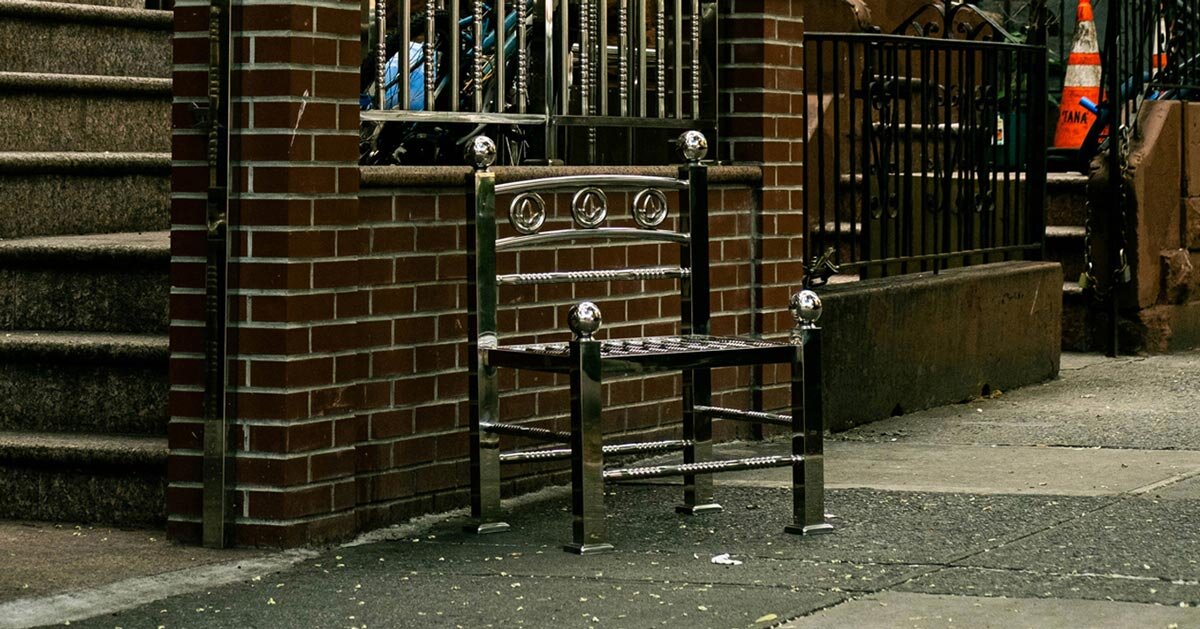
"Originated and mass produced in China in the 80s, these stainless steel architectural components spread quickly into countries near and far-like South Korea, where Han encountered them on a day-to-day basis growing up, due to their affordability, as well as ease of maintenance and customization. Not long after, these components landed in New York and were quickly adapted by not only Asian homeowners, but also West Indian homeowners as well, and became one of the signifiers of achieving the 'American Dream.'"
"Han finds that this defiant attitude is quite apt for today's political climate where many immigrant communities are constantly being targeted. In that vein, the name of the chair, White Picket Chair, directly questions what the image of the American Dream is supposed to be."
"The project examines how architectural elements associated with security, aspiration, and visibility can be translated into the domestic sphere. Flashy and present, the chair demands one's attention just as much as the real fences, guardrails, awnings, and doors do in the streetscape of Sunset Park or Flushing."
The White Picket Chair reconfigures mass-produced stainless steel architectural components commonly found in New York City neighborhoods into a functional seating object. These components, originating from China in the 1980s, spread globally due to affordability and ease of maintenance, becoming symbols of achieving the American Dream for Asian and West Indian homeowners. Han Seungmin's design translates elements associated with security, aspiration, and visibility from the streetscape into the domestic sphere. The chair's unapologetic aesthetic reflects a defiant attitude relevant to contemporary politics, where immigrant communities face targeting. The name directly questions what the American Dream image should represent.
#immigrant-aesthetics #design-activism #architectural-repurposing #american-dream-critique #cultural-identity
Read at designboom | architecture & design magazine
Unable to calculate read time
Collection
[
|
...
]