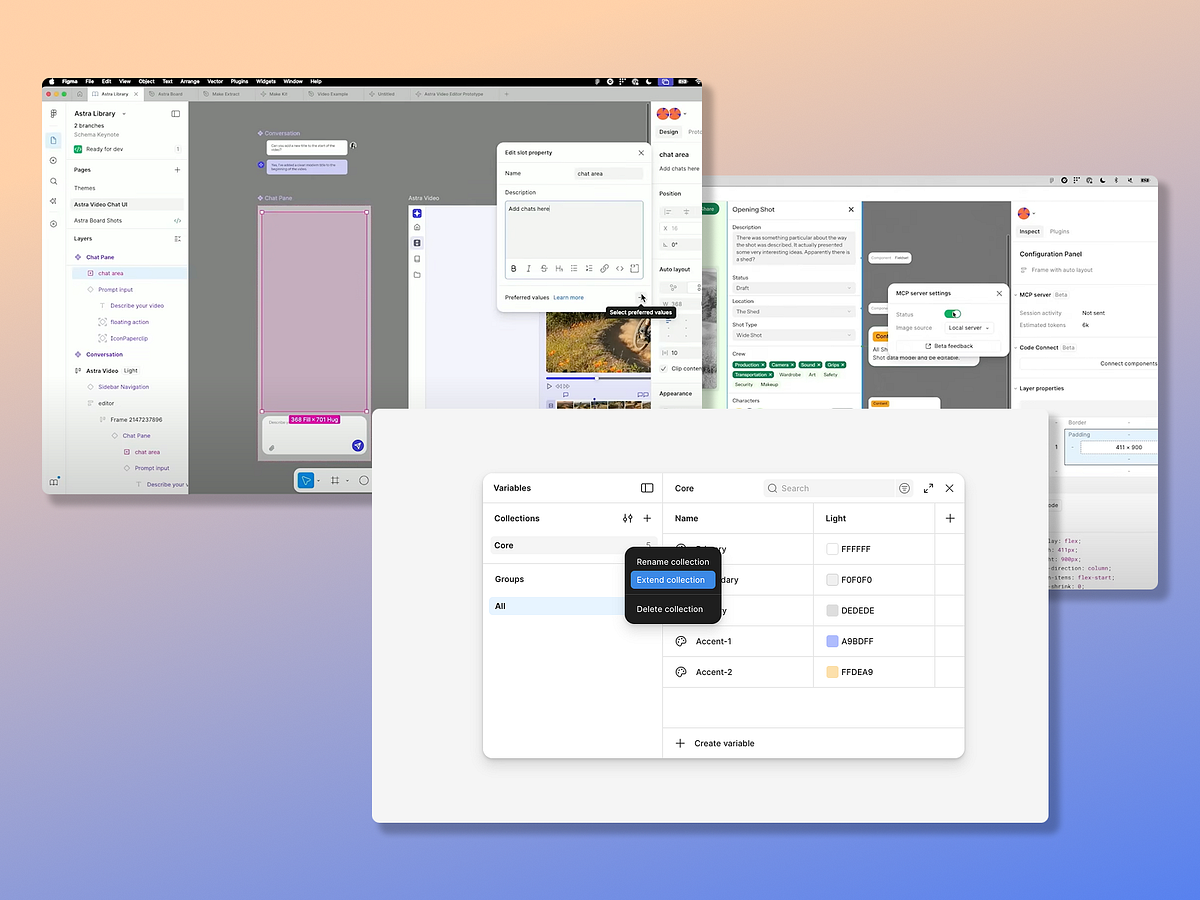
"There have been issues with multi-brand systems not meeting their adopter needs due to the limitations of Figma variables. Product teams would create hacks by copying variable collections into their own files, recreating themes, or even rebuilding token structures from scratch... meaning system updates and governance became broken across adopters. But with extended collections, Design System teams can support multiple brands/ products that require their own custom theme, while keeping variables in sync with the core system."
"But there are still limits of extended collections: You cannot edit the variable's alias name, scope, or mode in extended collections Extended collections still require strong naming conventions and structure Product designers may struggle to understand which token is pulling from where unless documentation is clear They require more governance and a review process must be established for Design System members to ensure correct usage"
Figma introduced extended variable collections to support multi-brand and multi-product design systems by enabling teams to publish a core parent collection that others can extend with brand-specific themes. Extended collections inherit updates from the parent and allow overrides only for necessary values, keeping variables synchronized across adopters. Limitations include inability to edit variable alias, scope, or mode in extensions, the need for strict naming conventions, potential confusion about token origins for product designers, and increased governance and review processes. Extended collections are restricted to full-seat Enterprise plans. Figma also increased mode limits per plan.
Read at Medium
Unable to calculate read time
Collection
[
|
...
]