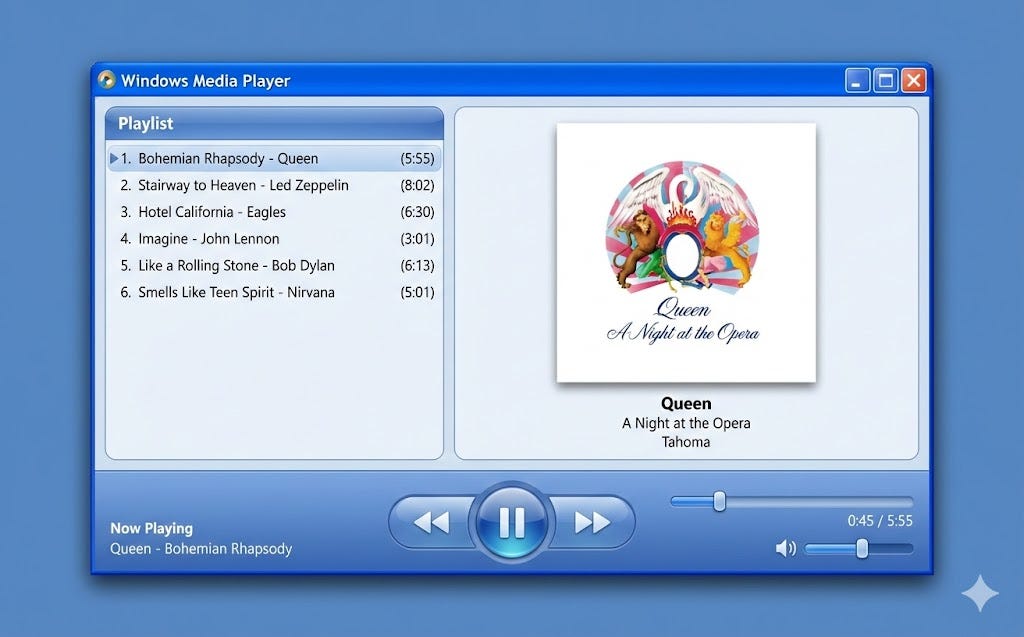
"In this article, I explore how Nano Banana Pro can be used to recreate modern interfaces through the lens of iconic UI eras: from the strict utilitarianism of Windows 95 and the calm clarity of classic Mac OS, to the expressive skeuomorphism of iOS 6 and the atmospheric minimalism of PlayStation 2. Quick note: To keep the exploration consistent, all examples follow the same underlying prompt structure; so the differences you see come from the style itself, not from changes in layout or complexity."
"Early Windows interfaces were built for clarity, constraints, and efficiency. The visual language of Windows 95 (beveled edges, bitmap typography, and rigid layouts) creates a strong aesthetic that feels both nostalgic and surprisingly usable today. This style is perfect for exploring how modern complex products like task managers might look if they were designed back in 90s, with strict UI discipline and zero visual excess."
Nano Banana Pro recreates modern interfaces by applying distinct historical operating system visual languages, including Windows 95, classic Mac OS, iOS 6, and PlayStation 2. Consistent prompt structures isolate style differences so comparisons focus on visual and interaction language rather than layout or complexity. The Windows 95 task manager example demonstrates how beveled edges, bitmap typography, rigid layouts, and strict UI discipline produce a nostalgic yet usable aesthetic. Emphasizing constraints and clarity yields efficient interfaces with clear affordances. Exploring multiple eras reveals how visual hierarchy, interaction patterns, and emotional tone change user perception and product personality.
Read at Medium
Unable to calculate read time
Collection
[
|
...
]