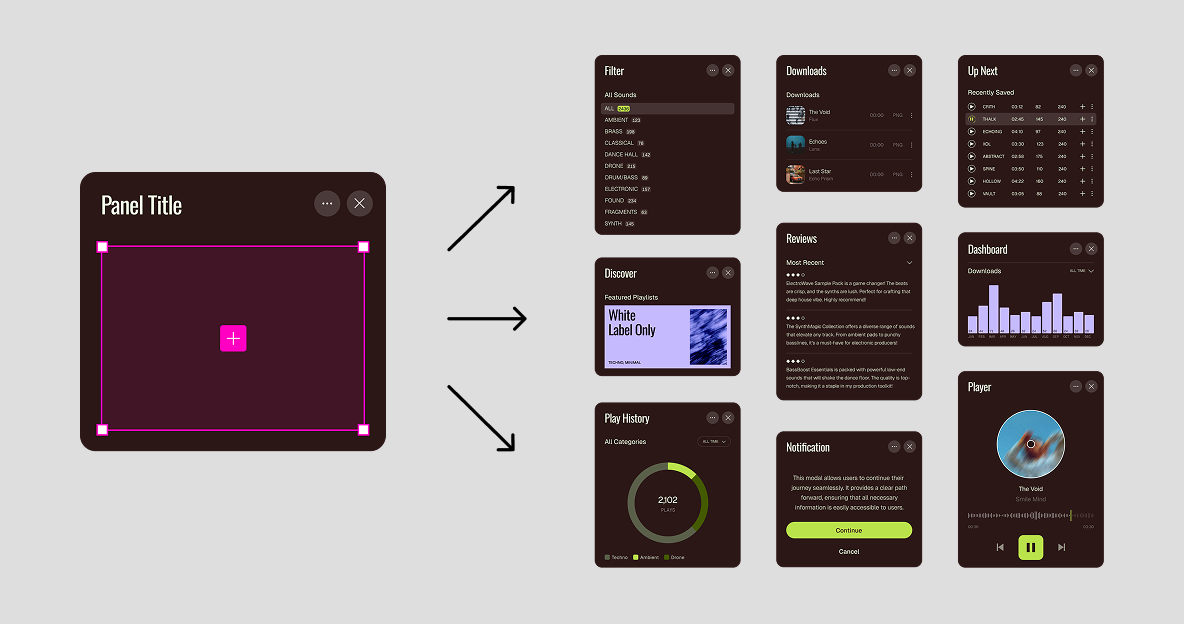
"Design systems promise consistency at scale. But as they grow, the guardrails meant to protect the brand can begin to limit expression, so teams find workarounds to bring back individuality. Libraries swell. Variants multiply. Instances get detached. What starts as a system for cohesion becomes a system people circumvent."
"With slots, designers can customize components, like menu options, buttons, or icons without detaching, so content can flex without breaking structure. This mirrors how components are built in code. Developers dynamically inject content and compose within a stable structure rather than duplicating it. Bringing that model into design makes components behave more like they do in production."
"Early users consistently saw the biggest wins by starting where teams were already working around the design system. For many teams, that meant focusing on foundational components like dialogs, menus, modals, cards, and panels. Across those teams, two patterns showed up again and again."
Design systems often become restrictive as they scale, prompting teams to circumvent guardrails through workarounds that create bloat and misalignment. Slots solve this by enabling dynamic content injection within stable component structures, mirroring how developers build in code. This approach reduces variant proliferation, simplifies handoff between designers and developers, and improves automation compatibility. Implementation benefits span all roles: system managers gain reduced maintenance burden and stronger production alignment, designers gain creative freedom within system constraints, and developers receive predictable structures that map directly to code. Early adopters achieved greatest success by targeting foundational components like dialogs, menus, and cards where teams were already creating workarounds.
#design-systems #component-flexibility #slots-architecture #design-to-development-handoff #scalable-design-patterns
Read at Figma
Unable to calculate read time
Collection
[
|
...
]