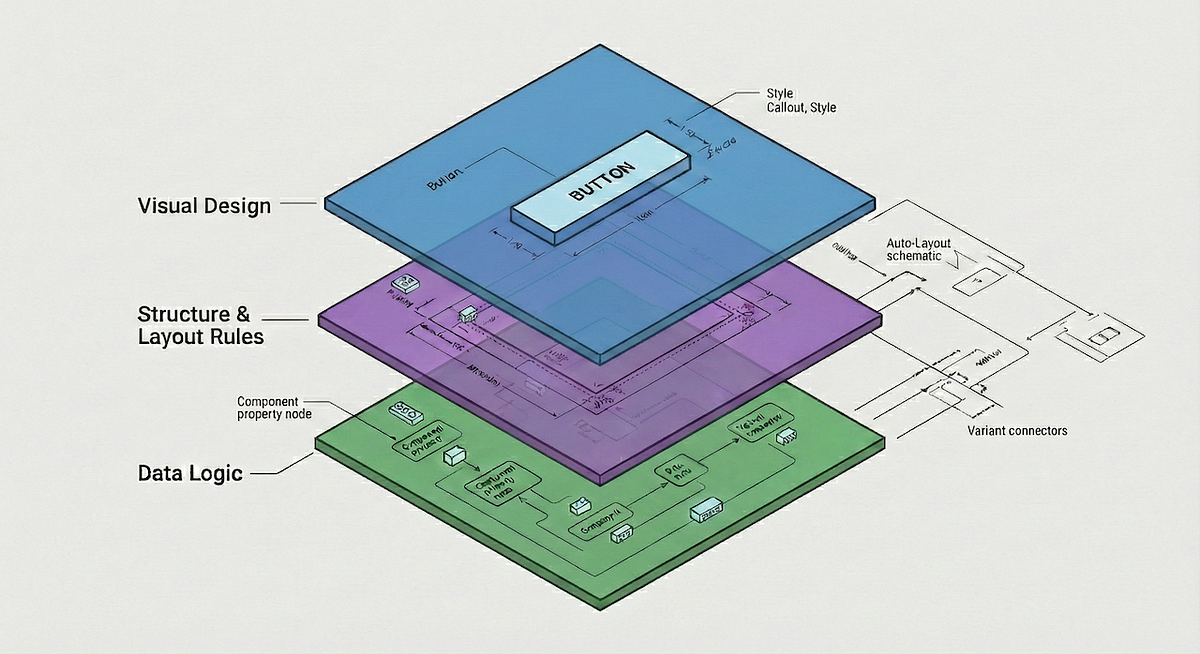
"Figma design system components are intentionally optimized for human designers. They are built to be flexible, expressive, and efficient to use when composing application experiences at scale. Within that flexibility, there are edge conditions - such as permissive naming patterns, optional variants, or structurally equivalent but non-identical configurations - that are perfectly usable for a human designer assembling the intended UI. Those nuances don't block design outcomes. An AI agent, however, treats every structural detail as an explicit instruction."
"The implication was unavoidable: Figma is no longer just a drawing board. It is part of the source code. Figma is static. Software is dynamic. This gap became obvious when we tested a Breadcrumb component. Visually, it's just text and separators. Behaviorally, it's not. In our system, long paths collapse the middle items into an ellipsis that reveals a dropdown when clicked. None of that logic exists in a static frame."
"To generate the component correctly, I had to inject what I came to think of as narrative logic - explicitly describing the rules, constraints, and intent behind the UI. Designing the appearance wasn't enough; the behavior had to be architected and explained. There were moments when the agent produced sloppy output - ignoring established tokens even though it had access to the Figma JSON and the full variable map."
Design system components in Figma are optimized for human flexibility but contain edge conditions like permissive naming, optional variants, and non-identical configurations that humans tolerate. AI agents interpret every structural detail as explicit instruction, forcing libraries to become structurally unambiguous and requiring manual sanitization. Visual designs represent appearance but omit dynamic behavior; components like breadcrumbs need explicit behavioral rules to handle collapsing and dropdowns. Narrative logic must be injected to describe rules, constraints, and intent so generated components behave correctly. Automation benefits from enforced processes and explicit variables because agents can ignore tokens and produce sloppy output despite access to Figma JSON and full variable maps.
Read at Medium
Unable to calculate read time
Collection
[
|
...
]