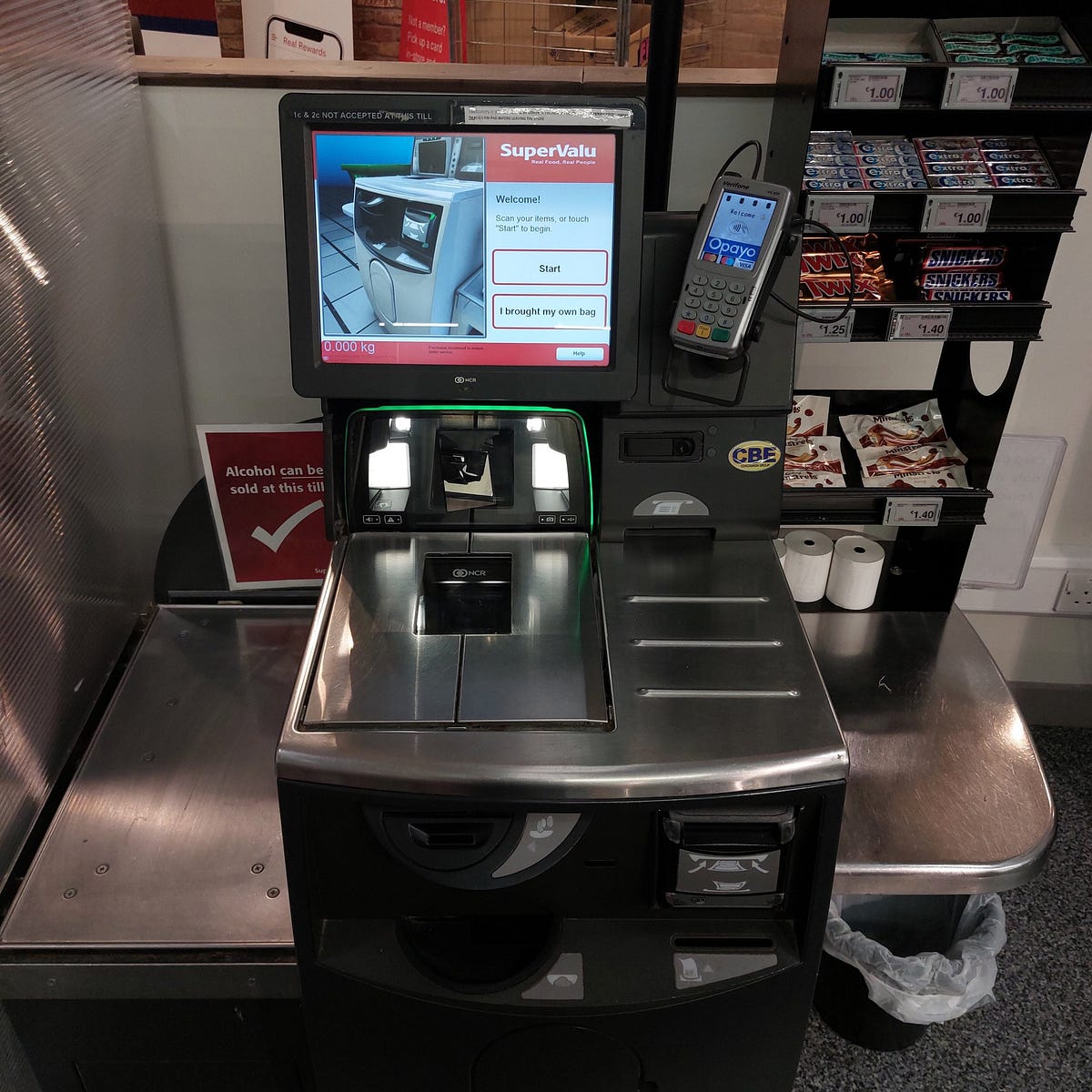
"The reason is a lack of user research to understand how people think and act when shopping, and how they navigate their way through the experience to get it done. It's the user experience concept of a mental model, if you want to get fancy, or the application of a system matching the real-world heuristic they teach you about in college."
"The dominant mental model of customers here is to move the shopping items from left to right, from their basket to the scanner, and then to bagging, and then to payment. Yet, in my local supermarket, the machines are configured to expect the opposite direction (thus the unpaid-for items get put in the final bagging area first, triggering the heavenly voice from above with the cryptic message)."
"So, we have an expensive digital implementation that delivers a dismal customer experience, resulting in associated delays and costs, as human assistance is required to complete basic tasks, and customers vow "never again". This is basic stuff to fix. Spending a few minutes watching how people shop and talking with them afterwards, or asking them to talk through their experience, would have been the way to avoid this design failure, ludicrous message, and the need for expensive, contin"
Automated checkout machines often fail because designers did not observe real shoppers or test user behavior. Shoppers commonly follow a left-to-right mental model—basket to scanner to bagging to payment—but some machines expect the reverse, causing unpaid items to trigger error messages. These mismatches produce delays, require staff intervention, increase costs, and lead customers to abandon transactions or avoid the store in future. Simple observational user research, brief talk-throughs, and testing with real users would reveal these heuristics and enable straightforward fixes to improve experience and reduce operational expense.
Read at Medium
Unable to calculate read time
Collection
[
|
...
]