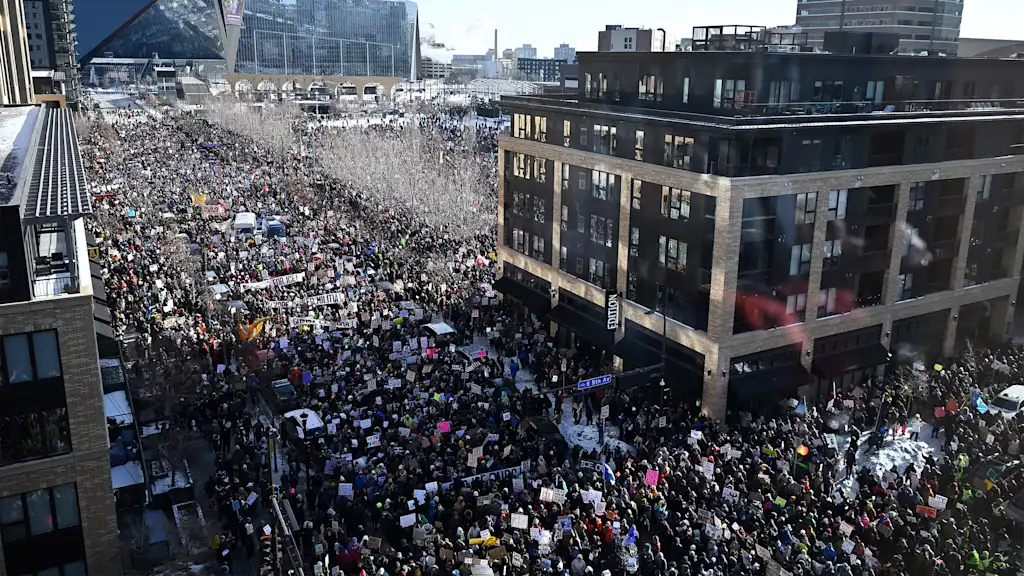
"ICE's occupation in Minnesota has lasted weeks, and until a couple of days ago, the state's major corporations, quick to issue statements in wake of George Floyd's shooting in 2020, had been largely silent. When Fast Company reached out to several heavy hitters in mid-January, including Target and Best Buy, there was no response. Finally, on Sunday, 60 of the state's major business leaders put out a response calling for "de-escalation." But the statement has been criticized on social media and beyond, with some calling it "spineless.""
"For weeks, the Twin Cities have been awash in chaos and fear as ICE raids streets, shops, and schools, profoundly disrupting daily life, as well as economic activity. Roughly 80% of immigrant-owned businesses along main streets have closed, while restaurants and health care centers in some of the surrounding suburbs have had to cut hours because employees are afraid to come to work. Last Friday, there was an economic blackout as hundreds of businesses closed and over 75,000 protesters marched."
"This interview was conducted over two days and has been edited for length and clarity. Well, I think the statement itself is very significant. If you worked in a large company, you can't believe how difficult it is to get not just one but 60 CEOs from a wide range of businesses to [do the same thing]. These people are very cautious about signing on anyone else's stat"
Minnesota experienced weeks of ICE raids that disrupted daily life across the Twin Cities, including streets, shops, and schools. Federal agents fatally shot U.S. citizens Renee Good and Alex Pretti amid the operations. Major corporations remained largely silent for weeks before 60 business leaders issued a clustered call for "de-escalation," a statement later criticized as "spineless." Immigrant-owned businesses along main streets saw roughly 80% closures, and restaurants and health centers cut hours as employees avoided work. An economic blackout occurred when hundreds of businesses closed and more than 75,000 protesters marched. Former Medtronic CEO Bill George noted the difficulty of coordinating many CEOs to sign a single statement.
Read at Fast Company
Unable to calculate read time
Collection
[
|
...
]