President Donald Trump raised a global tariff from 10% to 15% within a day after a Supreme Court ruling struck down earlier levies under the International Emergency Economic Powers Act. He first reissued a 10% rate under Section 122 of the 1974 Trade Act and then increased it to 15%, a measure that can last up to five months and may face legal challenges. The Section 122 tariffs must be applied uniformly to all trading partners, overriding a prior U.K. deal that set a 10% rate. Other partners such as the EU and Japan already had 15% arrangements, and economists suggested revenue motives for the hike.
"Less than 24 hours after President Donald Trump signed an order establishing a new 10% global tariff, he announced an increase to 15%, upending one of his signature trade deals in the process. The abrupt change followed the Supreme Court's ruling Friday that struck down his tariffs under the International Emergency Economic Powers Act. Hours after the decision, he imposed a 10% rate under Section 122 of the 1974 Trade Act, then hiked the new duty on Saturday morning."
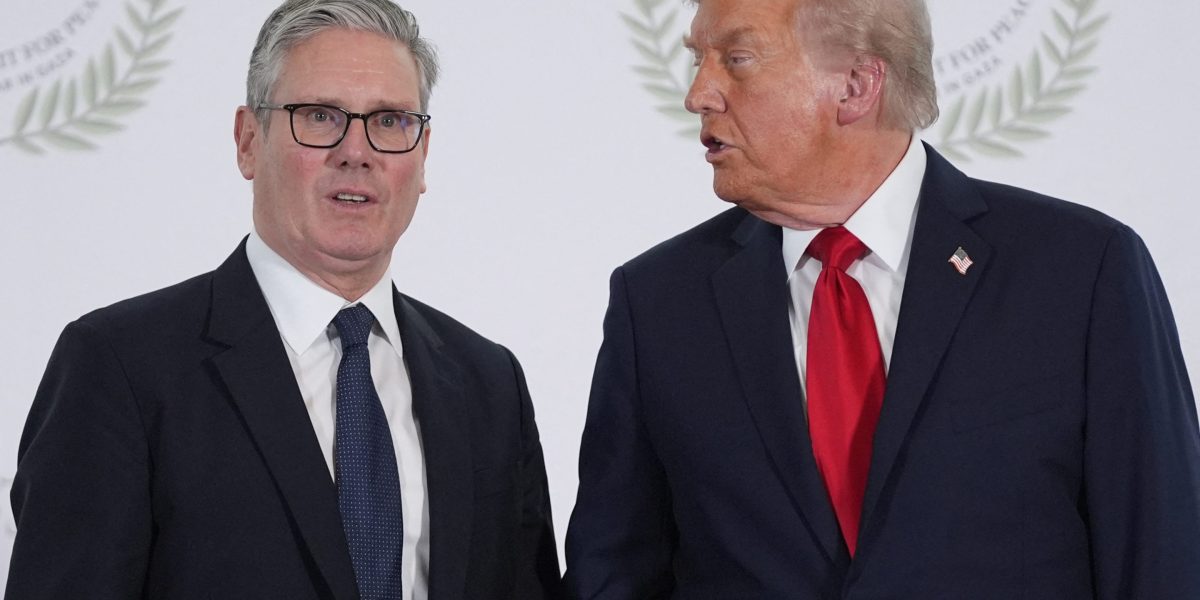
"But unlike Trump's attempt to invoke the IEEPA levies, the new ones must be applied uniformly across all trading partners, meaning everyone must face a 15% rate. That conflicts with the Trump administration's trade deal reached last year that set a 10% rate on imports from the U.K. British Prime Minister Keir Starmer notably took a more conciliatory approach to Trump's stunning "Liberation Day" tariffs last year, and Trump administration officials held up the U.K. trade deal as an example of how playing ball with the U.S. could result in a more favorable rate."
"Paul Ashworth, chief North America economist at Capital Economics, speculated that Trump's abrupt decision to increase his brand new tariff may have been because 10% would have generated less revenue. "It also means some of America's biggest trading partners, like the EU and Japan, will find themselves exactly back where they were last week," he said in a note Saturday. "For the UK that thought it had secured a more advantageous 10% rate, however, this is something of an eff you. From Trump's perspective though, it was unavoidable since Section 122 explicitly notes that any tariff must be appli"
Read at Fortune
Unable to calculate read time
Collection
[
|
...
]