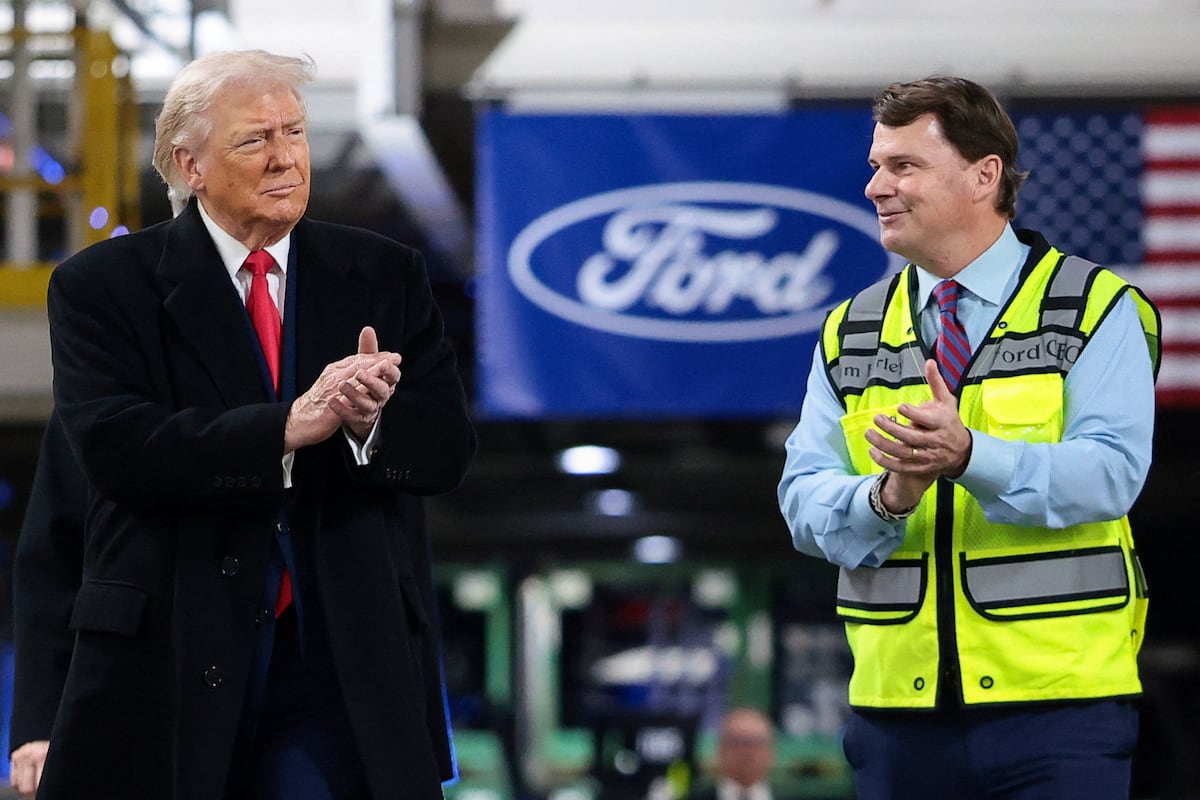
"If this framework materializes, it would require Chinese manufacturers to produce locally while offering some protection to domestic automakers, according to sources familiar with the discussions consulted by Bloomberg. The idea which members of Trump's Cabinet discussed with Farley in January would involve Chinese automotive companies entering the market through local partners and creating joint ventures in which the majority of the capital would remain in U.S. hands."
"These companies would be structured in such a way that both the Chinese and U.S. partners would share profits and technology within the joint venture, according to the same sources. No decision has been made, and the conversation was described by these individuals as informal and preliminary. Such an arrangement would mirror what China required from Western manufacturers three decades ago, when they had to partner with Chinese companies in order to establish factories in the country."
"This was the case, for example, with the Volkswagen Group, which decided to partner with SAIC Motor owner of the MG brand to sell its vehicles in China. MG has since successfully entered Europe, especially Spain, where its ZS model was the eighth bestselling vehicle in January. These conversations are taking place as Chinese manufacturers move increasingly closer to the United States. Canada recently announced a plan to allow certain Chinese electric vehicles into the country,"
Jim Farley met senior Trump administration officials to explore a framework allowing Chinese automakers to enter the U.S. market under conditions requiring local production and protections for domestic automakers. The proposed model would use local partners and joint ventures with the majority of capital remaining in U.S. hands, and would include profit- and technology-sharing within the joint venture. No final decision has been made; conversations were described as informal and preliminary. The arrangement would mirror earlier Chinese requirements for foreign manufacturers. Chinese automakers are expanding regionally, with policy shifts in Canada and growing presence in Mexico.
Read at english.elpais.com
Unable to calculate read time
Collection
[
|
...
]