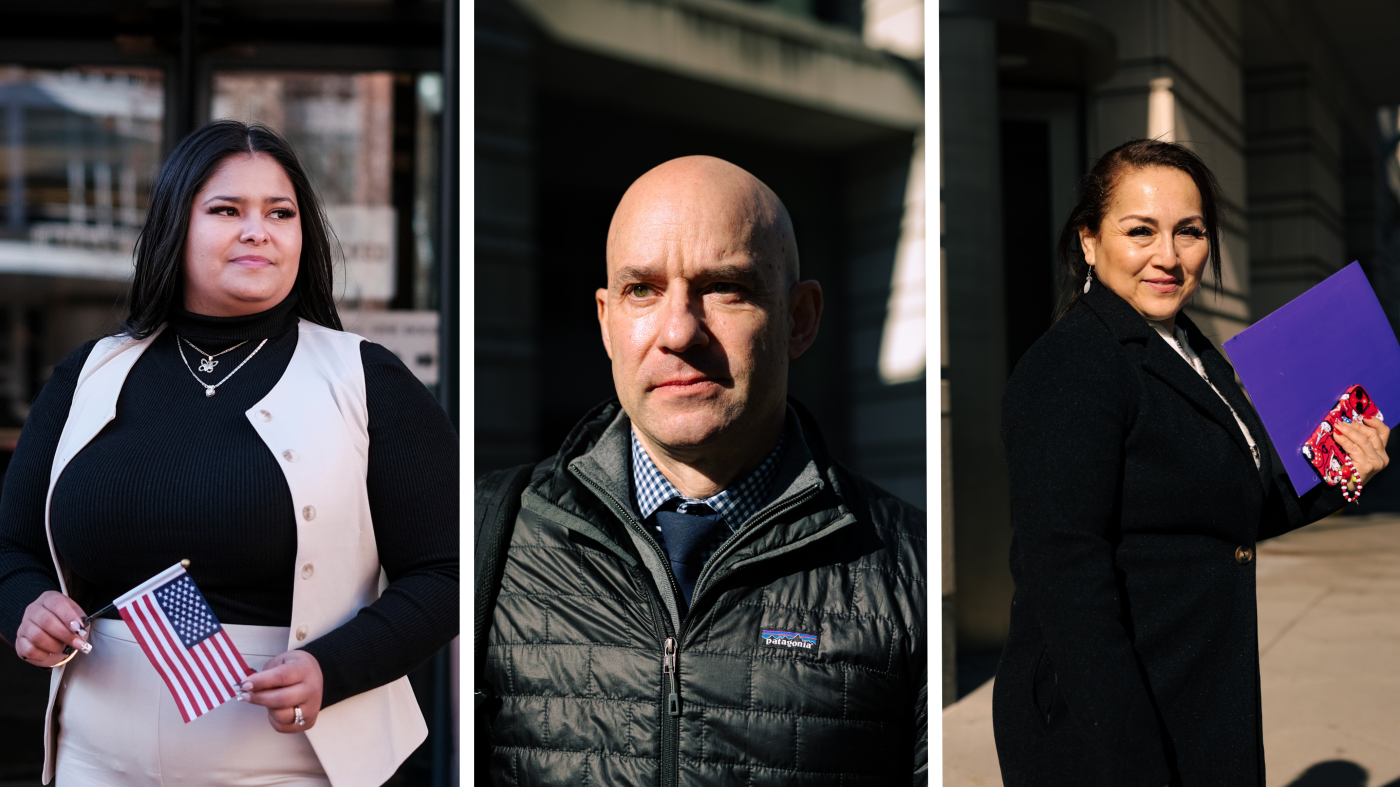
"On a recent Tuesday in January, Florencia Paz, an immigrant from Italy and Argentina, joined the line to enter the U.S. District Court in the District of Columbia. She pushed a stroller with her sleeping baby while her husband, a U.S. citizen, quieted their crying toddler. It was biting cold outside, but Paz said all she felt was excitement and anticipation. Two hours later, she walked out of the courthouse an American citizen, having taken her naturalization oath alongside 103 others from 40 different countries."
"Paz said that, after 13 years living in the United States, becoming a citizen was both joyful and a profound relief. "I came here to this country by myself, and I became an American in my mind and my heart," Paz said. "I'm not an American by birth in the sense I have not grown up in this culture. But I realize that my path and my route is common to a lot of Americans.""
"Among those, U.S. Citizenship and Immigration Services (USCIS) paused the processing of existing immigration applications, including naturalizations, for immigrants from 39 countries who now have travel restrictions to come to the U.S. "One thing we're finding is that because the journey to citizenship is slower now than it has been in the past, that there are fewer people making it here today," said Barbara Zia."
Florencia Paz, an immigrant from Italy and Argentina, took the naturalization oath in Washington, D.C., after 13 years in the United States, becoming an American citizen alongside 103 others from 40 countries. Naturalization ceremonies in Washington and northern Virginia were largely celebratory, with families present and volunteers registering new citizens to vote. U.S. Citizenship and Immigration Services paused processing existing immigration applications for immigrants from 39 countries that now face travel restrictions, slowing many pathways to citizenship. Observers noted lower attendance at some ceremonies — one court swore in 104 people instead of the usual 125 — and a February ceremony was canceled.
Read at www.npr.org
Unable to calculate read time
Collection
[
|
...
]