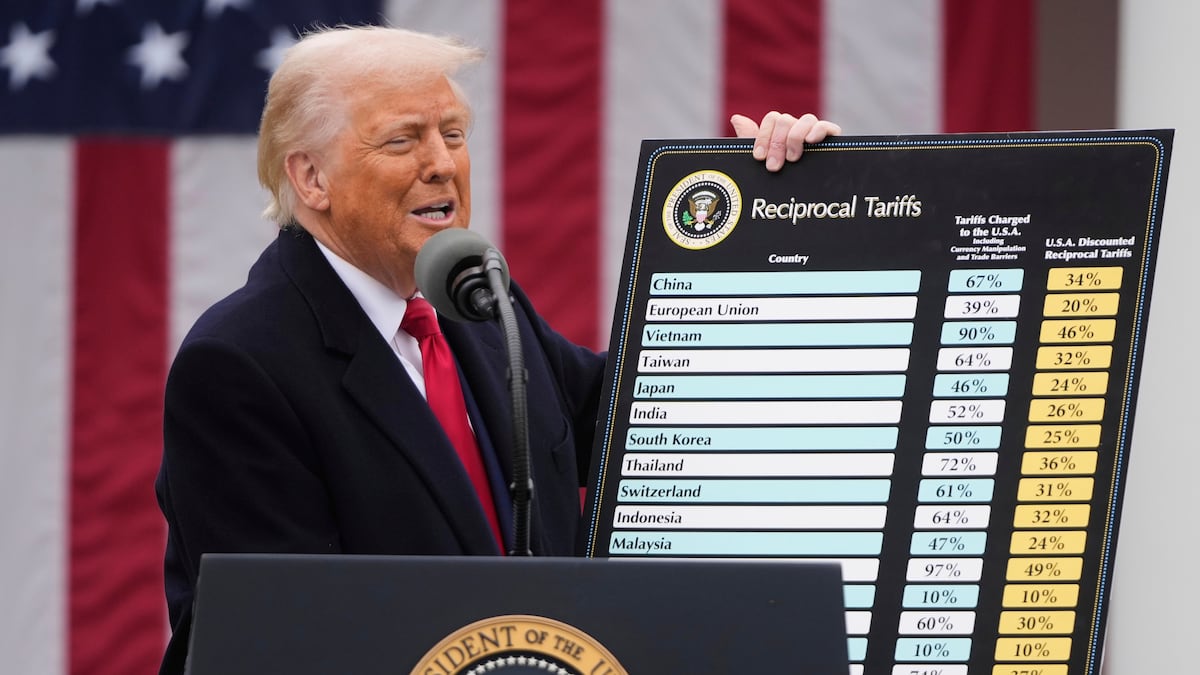
Donald Trump's tariff policy has been marked by volatility and unpredictability for trading partners. The Supreme Court ruled that indiscriminate reciprocal tariffs are unconstitutional and cannot continue to be collected. The president responded by announcing a global 10% tariff applied to all countries under Section 122 of the Trade Act of 1974. That provision permits tariffs for 150 days while Congress must decide whether to approve them. The measure addresses a balance-of-payments issue but does not guarantee long-term stability. The administration could theoretically declare new emergencies and restart tariffs, raising separation-of-powers concerns.
"If anything has defined Donald Trump's aggressive tariff policy since his return to the White House, it has been its volatility and the difficulty for the trading partners punished with those levies which the President of the United States called reciprocal to know what to expect. This Friday, the Supreme Court ruled in a decision that dealt a near-fatal blow to Washington's trade agenda by determining that those indiscriminate rates are unconstitutional and therefore cannot continue to be collected."
"Trump, after years of saying that tariff is the most beautiful word in the dictionary, celebrated a ruling that, he argued, clarifies things and announced a global 10% tariff applicable to all countries. This time, however, it was not based on the law he had previously relied on (a 1977 emergency powers statute known as IEEPA) but on a different one. This provision allows tariffs to be imposed for 150 days, during which time Congress must agree to approve them."
Read at english.elpais.com
Unable to calculate read time
Collection
[
|
...
]