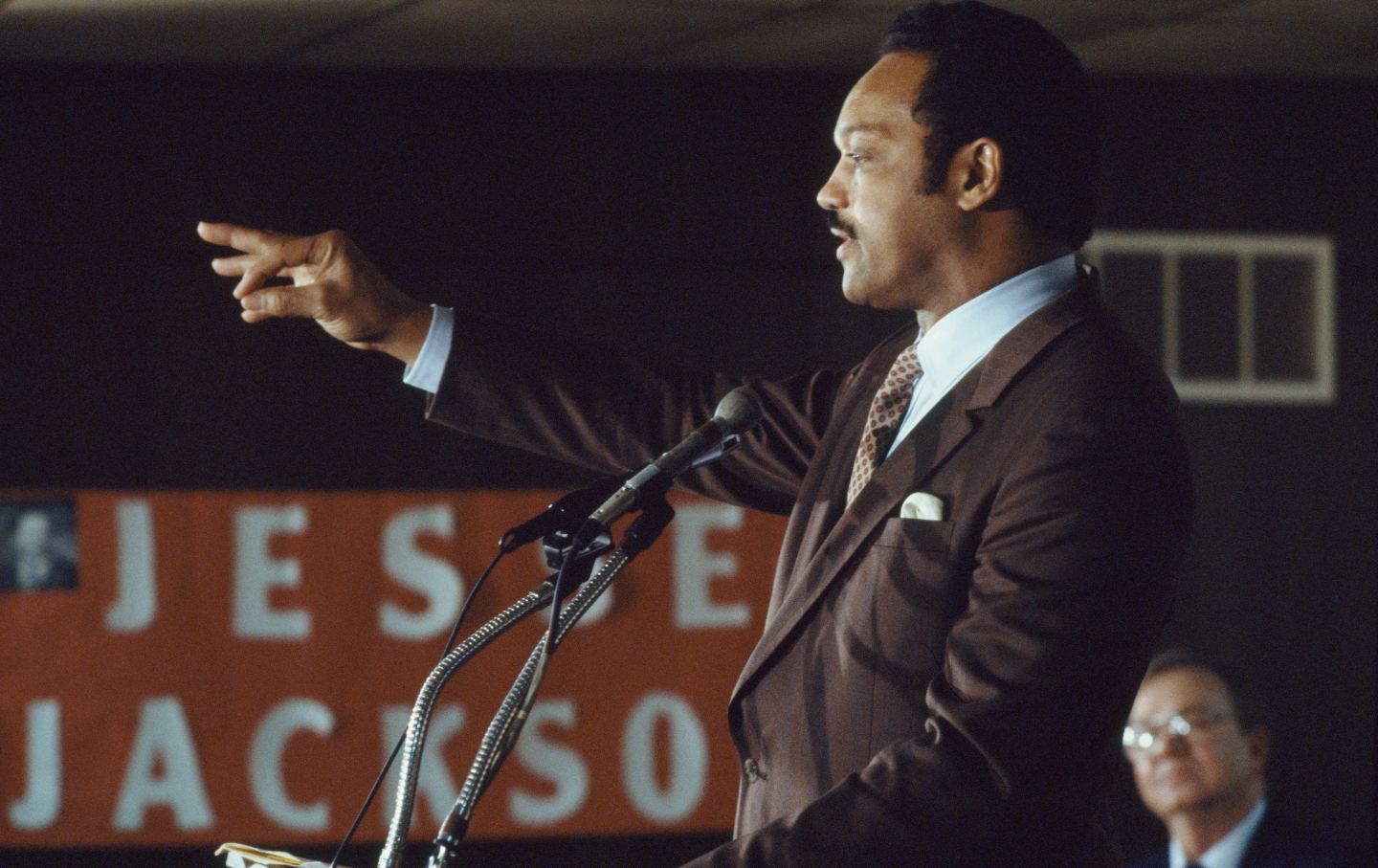
"Jesse's off-camera political voice was generally forbearing: quietly connecting, humorously cajoling, deal-making with the artful rhythm and grace of a choreographer. Jesse held in his head a map of the nationwide grassroots Democratic Party: Which clergy could turn out the church buses in East St. Louis? Which banker could arrange a campaign donation in Des Moines? Which union local could swing Maryland? Jesse knew all the players, knew the tone and the particular words that would stir each one to action."
"Following Kamala Harris's loss to Donald Trump, I thought often of Jesse's relentlessly human-scale, ward-level organizing—especially when I looked at the 2024 election results in my own city of New Haven and realized just how dramatically Democratic turnout had fallen since 2020: another election lost, in the words of Jesse's 1984 Democratic Convention speech, "by the margin of our despair.""
In 2000 Jesse Jackson collaborated on a book about capital punishment and often wrote in hotel rooms, airport lounges, and diners between national commitments. His off-camera political voice was forbearing, quietly connecting, humorously cajoling, and deal-making with choreographer-like rhythm, different from his public oratory. Jackson maintained a detailed map of grassroots Democratic networks, knowing which clergy, bankers, and union locals could mobilize votes and resources across regions. Liberal campaign technocrats prioritized deep-pocket donors and computer modeling over ward-level, cross-class, cross-racial organizing, contributing to sharply lower Democratic turnout after 2020. Lower turnout produced electoral losses framed as defeat "by the margin of our despair," reflecting the cost of ignoring inclusive, relational organizing methods.
Read at The Nation
Unable to calculate read time
Collection
[
|
...
]