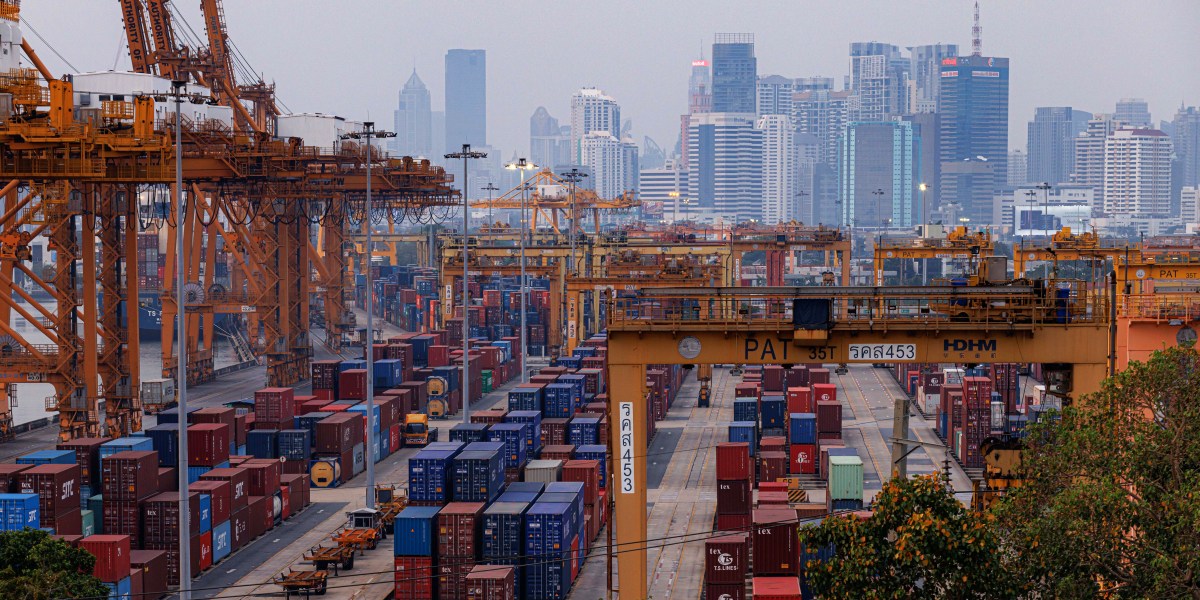
"This is because many Chinese exporters turned to transshipping to reduce tariff payments-a process that led them to route goods through ASEAN countries before shipping them to the U.S. Consequently, in 2025, the U.S. saw a reduction in Chinese goods, which were slapped with steep 40% tariffs, and an increase in ASEAN imports, which had lower tariffs averaging 10%."
""Our message to the nations of Southeast Asia is that the US is with you 100% and we intend to be a strong partner and friend for many generations to come," Trump told leaders at the ASEAN summit in Kuala Lumpur on Oct. 26, noting that two-way trade between U.S. and Southeast Asia had reached a record of $453 billion in 2024."
Sweeping U.S. tariffs implemented on Aug. 1 prompted many Chinese exporters to transship goods through ASEAN countries to reduce tariff payments. As a result, 2025 saw fewer Chinese-origin goods entering the U.S. subject to 40% tariffs and a rise in ASEAN-origin imports facing roughly 10% tariffs. The U.S. pursued trade deals with Thailand, Malaysia, Cambodia and Vietnam while China upgraded its free-trade pact (ACFTA 3.0) with ASEAN and remained the region's largest trading partner. ASEAN recorded resilient growth in 2025 (+4.8%), and tariff-related uncertainty eased across the region.
Read at Fortune
Unable to calculate read time
Collection
[
|
...
]