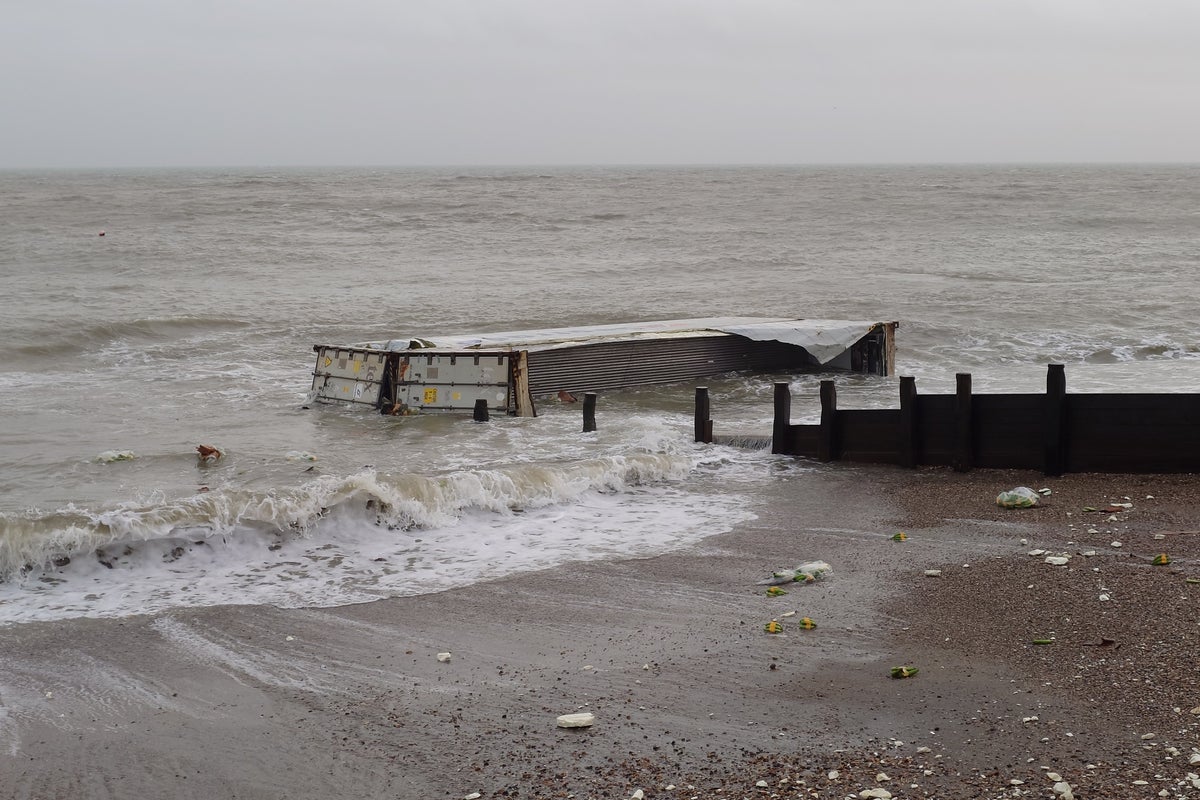
"They were from 16 containers spilled by the cargo ship Baltic Klipper in rough seas. In the new year, a further 24 containers fell from two vessels during Storm Goretti, with chips and onions among the goods appearing on the Sussex shoreline. For most people this is a nuisance or perhaps a bit of fun. For oceanographers like me, who study tides and currents, it is also an accidental experiment a rare chance to watch the ocean move things around in real time."
"Whether it's investigating the financials of Elon Musk's pro-Trump PAC or producing our latest documentary, 'The A Word', which shines a light on the American women fighting for reproductive rights, we know how important it is to parse out the facts from the messaging. At such a critical moment in US history, we need reporters on the ground. Your donation allows us to keep sending journalists to speak to both sides of the story."
"In reality, cargo has been falling off ships since traders first went to sea. What has changed is that, in the modern world, most goods are transported in standardised containers. Apart from oil, gas, vehicles, bulk grain, aggregates and people pretty much everything is moved this way. More than 250 million containers are shipped around the world each year, and it is likely that over 80% of goods in your home travelled at some point in a container by sea. Losses are rare."
Vegetables, bananas and insulation foam washed ashore along England's south‑east coast after 16 containers spilled from the cargo ship Baltic Klipper in rough seas. A later incident during Storm Goretti saw 24 containers fall from two vessels, depositing chips and onions on the Sussex shoreline. Such cargo losses offer oceanographers a rare accidental experiment to observe tides and currents moving debris in real time. Modern global trade relies on standardised containers, with more than 250 million moved yearly and over 80% of household goods transported at some point by sea. Despite high volumes, container losses remain rare.
Read at www.independent.co.uk
Unable to calculate read time
Collection
[
|
...
]