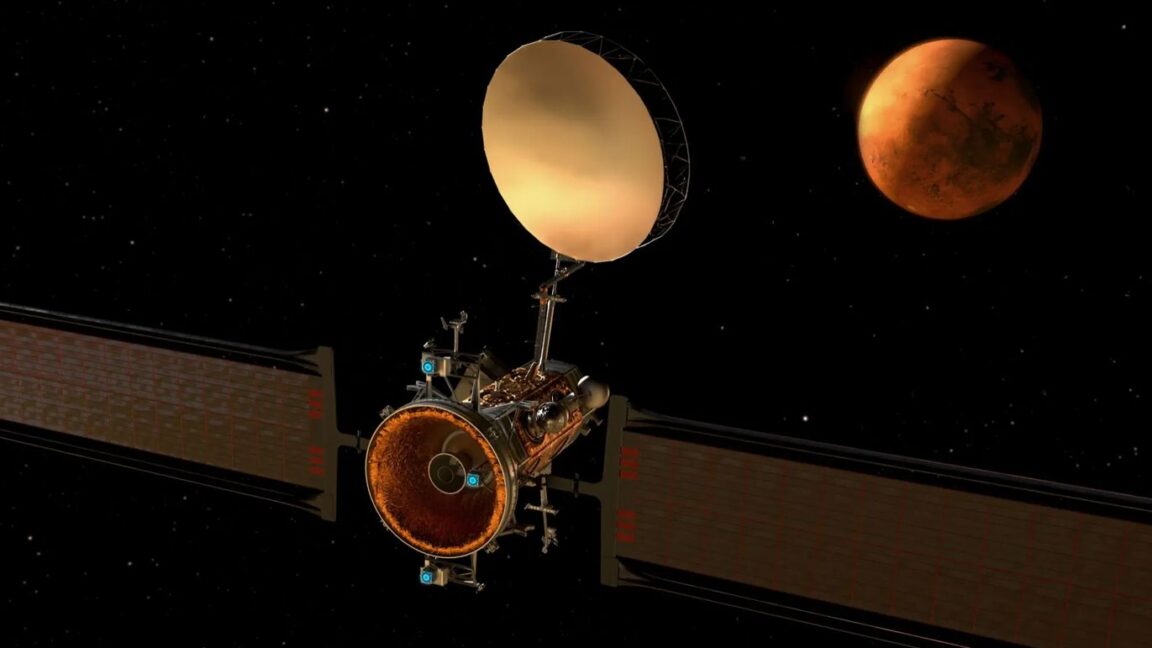
"A consequential debate that has been simmering behind closed doors at NASA Headquarters in Washington, DC, must soon come to a head. It concerns the selection of the next spacecraft the agency will fly to Mars, and it could set the tone for the next decade of exploration of the red planet. What everyone agrees on is that NASA needs a new spacecraft capable of relaying communications from Mars to Earth."
"Congress cared enough about this issue to add $700 million in funding for a "Mars Telecommunications Orbiter" in the supplemental funding for NASA provided by the "One Big Beautiful Bill" passed by the US Congress last year. However, this legislation, led by Sen. Ted Cruz, R-Texas, raised a couple of key questions. The first is the specific wording of the bill, authored by a key Cruz staff member, Maddie Davis."
"It specified that the orbiter must be selected from among US companies that "received funding from the Administration in fiscal year 2024 or 2025 for commercial design studies for Mars Sample Return; and proposed a separate, independently launched Mars telecommunication orbiter supporting an end-to-end Mars sample return mission." The reference to "commercial design studies" referred to companies that proposed faster and more affordable missions to return samples from Mars, selected in 2024."
A decision at NASA Headquarters must soon determine the next spacecraft to fly to Mars, with a priority on a new communications relay after the loss of MAVEN. The Mars Reconnaissance Orbiter remains the primary relay after 20 years in service. Congress allocated $700 million in supplemental funding for a Mars Telecommunications Orbiter via the One Big Beautiful Bill. The bill includes specific selection language tying eligibility to companies that received commercial design study funding for Mars Sample Return in fiscal 2024 or 2025, wording that observers say appears to advantage certain firms.
Read at Ars Technica
Unable to calculate read time
Collection
[
|
...
]