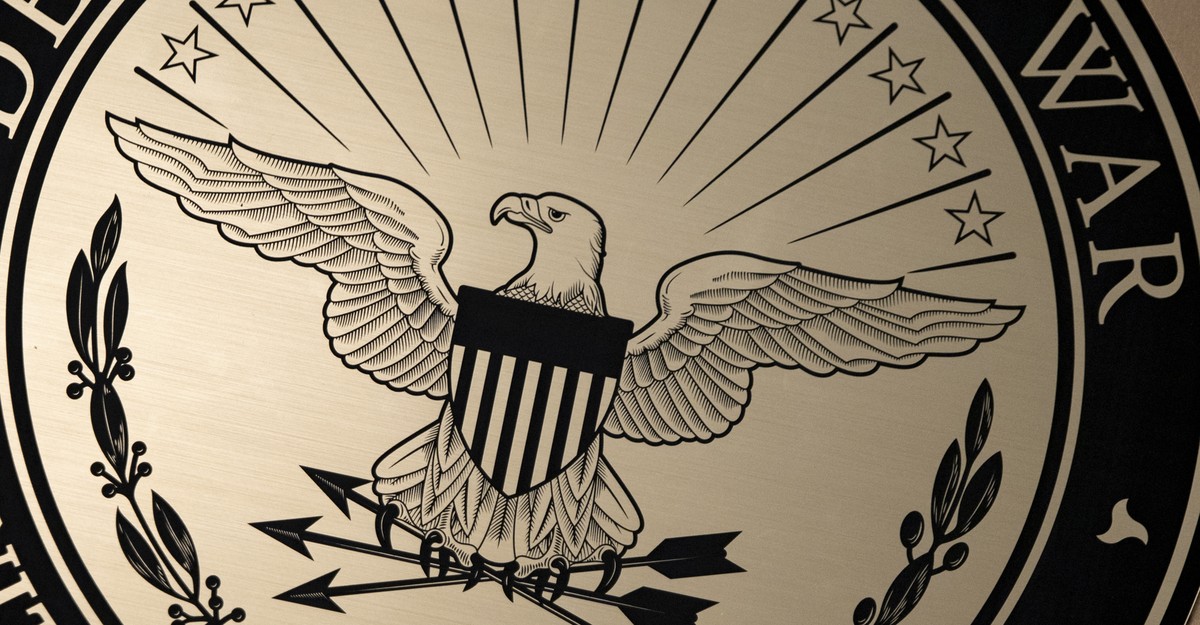
"Four days into this situation in the skies over Tehran, Speaker of the House Mike Johnson said, 'We're not at war right now.' This was, rather, a 'very specific, clear mission-an operation.' Operation does seem to be the preferred word in government talking points, even as it encompasses assassinating an ayatollah, torpedoing an Iranian naval ship, blowing up fuel depots and a desalination plant, and losing the lives of (so far) eight American service members along the way."
"According to the Constitution, only Congress can declare war. But President Trump, with his party's acquiescence, has reserved that lever for himself, as have other recent presidents before him. So, the logic goes, if we don't call it a 'war,' there's no reason to declare war."
"Leaders are sidestepping the term not just to avoid liability, but because Americans clearly want nothing to do with what it signifies. For most people, after the experie[nce of recent conflicts, the term 'war' carries significant weight and opposition]."
The Trump administration and Republican lawmakers deliberately avoid using the word 'war' to describe military operations in Iran, despite actions including assassinations, naval attacks, and infrastructure destruction. Speaker Mike Johnson characterizes these actions as a 'specific, clear mission' or 'operation' rather than war. This semantic avoidance serves two purposes: it circumvents the constitutional requirement that only Congress can declare war, allowing the president to act unilaterally, and it reflects public reluctance to engage in warfare. Republican lawmakers redefine war criteria, such as Senator Josh Hawley's assertion that war requires American ground troops. This linguistic evasion represents both constitutional manipulation and acknowledgment that Americans oppose military conflict.
#iran-military-operations #war-terminology-debate #constitutional-authority #presidential-power #political-rhetoric
Read at The Atlantic
Unable to calculate read time
Collection
[
|
...
]