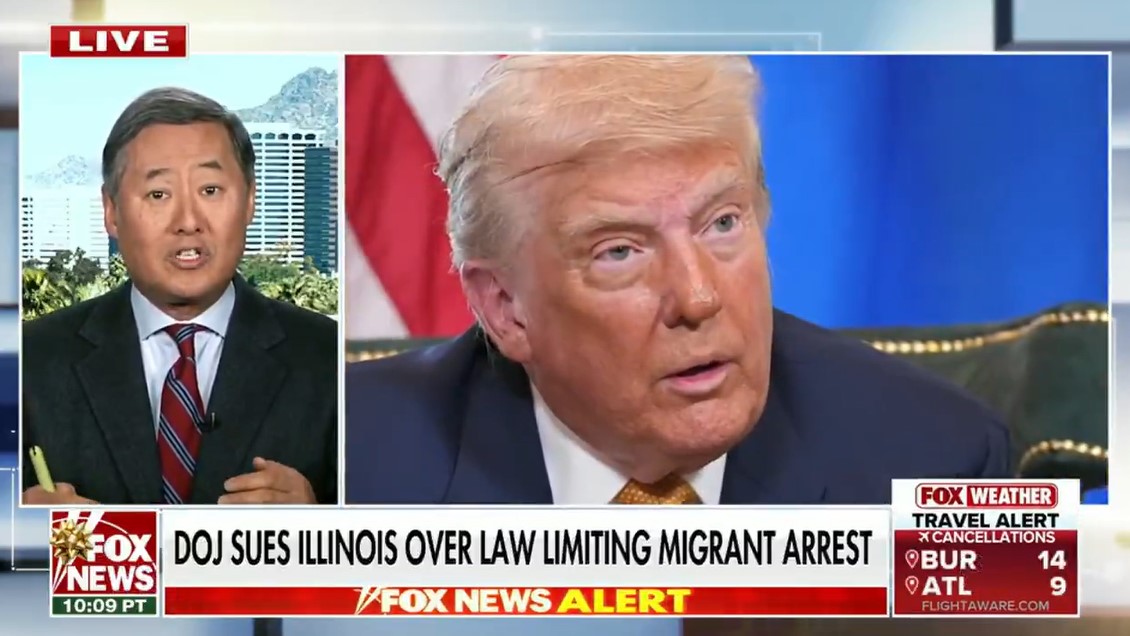
"Look, I'm trying to enforce the laws with ICE agents, with federal law enforcement, and I can't do it, so I need to call the National Guard. But the statute says the president has to be unable to enforce a law with regular forces. What does regular forces mean? We don't know. The Supreme Court has never decided that question before yesterday."
"The Supreme Court now says regular forces means you have to try with the regular Armed Forces first before you can bring out the National Guard. So the unintended consequence here might be that the president is going to have to call the 82nd Airborne or the Marines or the 101st Airborne Division, as, for example, President Eisenhower did after Brown versus Board of Education in the South to enforce desegregation."
The Supreme Court ruled that the president must attempt enforcement with regular Armed Forces before deploying the National Guard to enforce federal law. That interpretation constrains National Guard deployments and may require active-duty units to be used first to protect federal agents and buildings in cities like Chicago. The interpretation raises the prospect of deploying units such as the 82nd Airborne, the Marines, or the 101st Airborne to fulfill federal enforcement duties. Historical precedent exists for using active-duty forces to enforce federal directives during desegregation. Illinois officials characterized the decision as a check on perceived executive overreach.
#supreme-court-decision #presidential-military-authority #national-guard-deployment #federal-law-enforcement
Read at www.mediaite.com
Unable to calculate read time
Collection
[
|
...
]