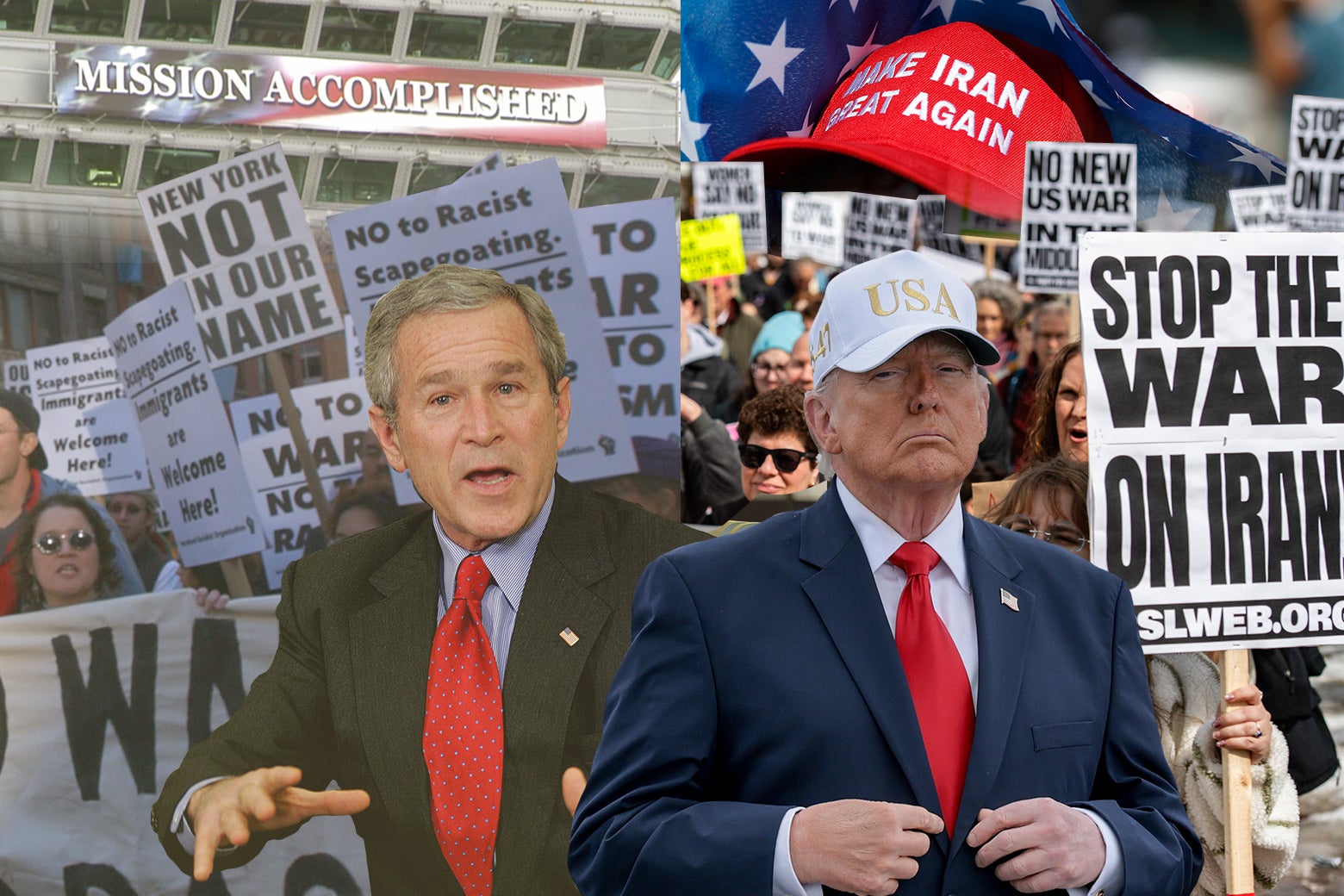
"The administration connected the Iraq war rhetorically, but not at all factually, to a national tragedy, seemingly banking on American ignorance about the Middle East-a national assumption that it was a vast desert of bad guys wishing the U.S. ill-to make the case that taking out Saddam Hussein would somehow partly avenge a terrorist act carried out primarily by Saudi nationals."
"The primary pretext for it was "weapons of mass destruction"-weapons, it turned out, that never existed, and for which extremely limited evidence was proffered in the first place. The government promised a quick fix: an efficient "shock and awe" bombing campaign; children so thrilled to be liberated they would greet soldiers with flowers in their fists; then, ostensibly, Iraqi democracy."
The Iran situation parallels the 2003 Iraq invasion, featuring similar elements: an authoritarian regime portrayed as an existential threat, a government making questionable claims, profit-seeking contractors, and public division. The Bush administration connected Iraq to 9/11 rhetorically but not factually, claiming weapons of mass destruction that never existed. Officials promised quick victory through bombing campaigns and democratic liberation, but the war caused prolonged devastation. The comparison highlights how American policymakers repeatedly employ similar narratives and justifications for military intervention in the Middle East, often based on incomplete evidence and strategic interests rather than genuine security concerns.
#military-intervention #middle-east-policy #iraq-war-parallels #government-deception #war-justification
Read at Slate Magazine
Unable to calculate read time
Collection
[
|
...
]