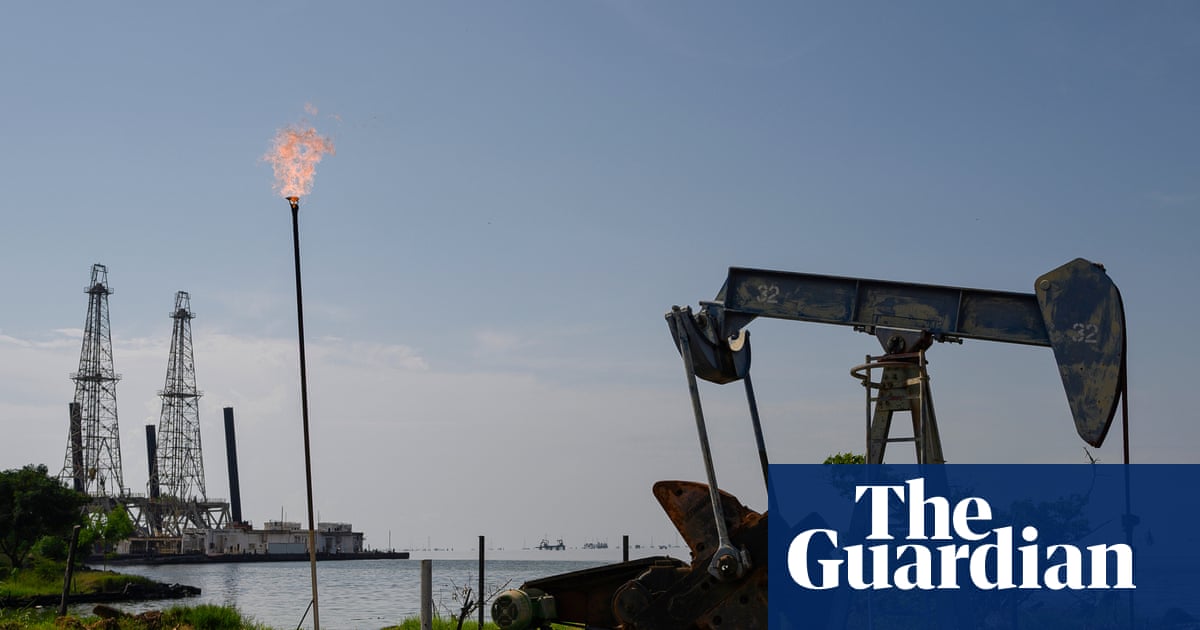
"Clustered along the US Gulf coast are some of the largest and most complex heavy-oil refineries in the world. These sprawling industrial hubs, owned by major US oil companies, stand ready to emerge as some of the major victors of Donald Trump's swoop on Venezuela. In some ways, these refineries are a relic of another time, built to process the heavy, unctuous crude imported from Latin America before the boom in lighter US shale oil emerged earlier this century."
"Venezuelan oil is particularly dense and sticky. The high-sulphur crude more closely resembles a semi-solid tar than the far clearer liquids produced in US shale heartlands, making it more difficult to extract and process into gasoline, diesel, jet fuel and feedstock for the chemicals industry. But it is exactly what many refineries in the US were built to treat. As a result, the US remains a major importer of crude to feed its refineries, despite being one of the biggest oil exporters in the world."
Clustered along the US Gulf Coast are some of the largest and most complex heavy-oil refineries, owned by major US oil companies. Those refineries were built to process dense, high-sulphur Venezuelan crude that resembles semi-solid tar and is harder to extract and refine into gasoline, diesel, jet fuel and chemical feedstock. The US remains a major importer of crude to feed its refineries despite being a leading oil exporter. Access to attractively priced Venezuelan crude could supply feedstock for reindustrialisation and help safeguard a US oil industry that has struggled. US refineries support about 3 million jobs while employing roughly 80,000 on-site, with a job multiplier of more than 45.
Read at www.theguardian.com
Unable to calculate read time
Collection
[
|
...
]