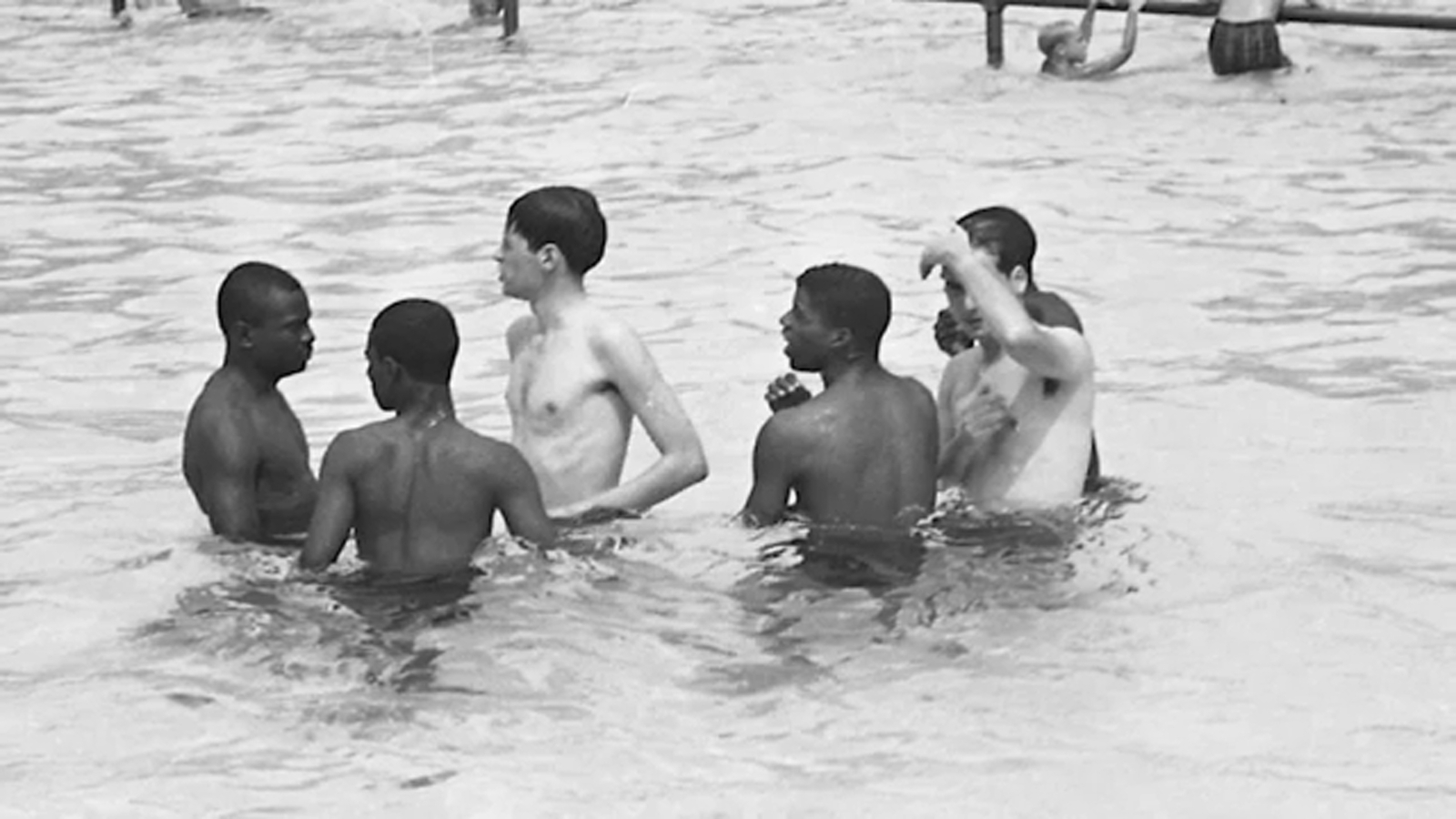
"You buy the tickets, and this is the park pool. If a Black person went up and tried to buy a ticket, they would not get sold a ticket. To tell you the truth, I was scared. Really scared. The whole project seemed a little bit dubious. But I was 100% behind it. We were going to do this."
"It wasn't weird because we came up in that era. We didn't have a chance to mix like we do today. Everybody deserved to be equal. But that'll never happen."
"In the early 1960s, swimming pools in North Carolina began to integrate under court orders and civil rights protests, though resistance persisted. During the summer of 1962, four Black teenagers, joined by two white friends, jumped into the Pullen Park pool, where they were unwelcome."
Raleigh's Pullen Park outdoor swimming pool, a symbol of Jim Crow segregation, has been removed and replaced with a historical plaque. In the early 1960s, North Carolina pools began integrating under court orders and civil rights pressure. During summer 1962, four Black teenagers and two white friends, including Ray Raphael, jumped into the previously all-white Pullen Park pool as an act of protest. Herman Hinton, a competitive Black swimmer, trained at the segregated John Chavis Memorial Park pool while being barred from Pullen Park. Raphael recalled the pool's discriminatory ticket system that refused service to Black customers. The removal of the pool and installation of the plaque represent acknowledgment of this segregated past.
#jim-crow-segregation #civil-rights-integration #swimming-pool-desegregation #1960s-north-carolina #historical-commemoration
Read at ABC7 San Francisco
Unable to calculate read time
Collection
[
|
...
]