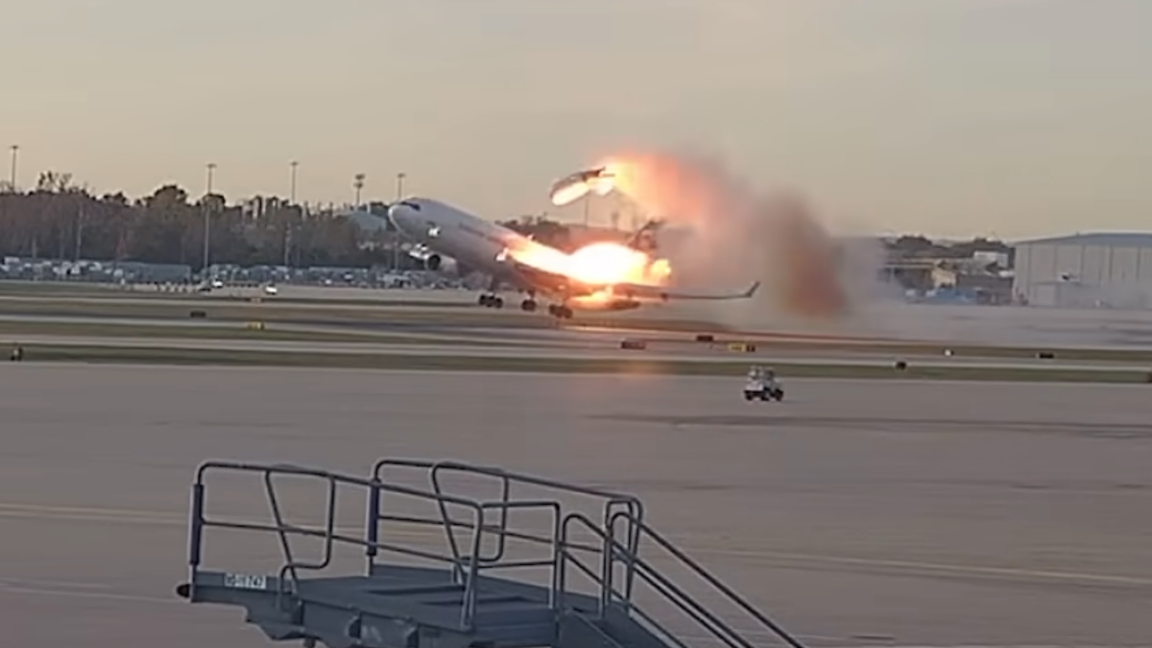
Internet tools and AI enabled people to recreate approximations of cockpit voice recorder audio from sound spectrum imagery released in civil transportation investigations. Public sharing of these reconstructed recordings prompted the US National Transportation Safety Board to suspend public access to its online docket system while reviewing the materials that made reconstruction possible. The NTSB stated it does not release cockpit audio recordings and is aware that advances in image recognition and computational methods can reconstruct approximations from released imagery. The issue is tied to the ongoing investigation of UPS flight 2976, a cargo crash in Louisville, Kentucky, where structural failure caused an engine to detach shortly after takeoff, killing three pilots and 12 people on the ground. A 1990 federal law prohibits public release of cockpit voice or video recorder content to protect crew privacy.
"The NTSB is aware that advances in image recognition and computational methods have enabled individuals to reconstruct approximations of cockpit voice recorder audio from sound spectrum imagery released as part of NTSB investigations, including the ongoing investigation of the crash last year of UPS flight 2976 in Louisville, Kentucky. The NTSB does not release cockpit audio recordings."
"The US National Transportation Safety Board (NTSB) usually shares factual reports and evidence gathered from investigations of aircraft crashes and other civil transportation incidents. But on May 21, the NTSB announced that the online docket system containing such information was "temporarily unavailable" as it reviewed the publicly available materials that had enabled people to re-create cockpit audio recordings from aircraft disasters."
"UPS flight 2976 was a United Parcel Service MD-11F cargo aircraft that crashed shortly after takeoff from Louisville, Kentucky, on November 4, 2025, following a structural failure that led to an engine physically detaching as the aircraft left the ground. The three pilots aboard the aircraft, including a relief pilot, were killed. Another 12 people on the ground were killed, with 23 people being injured."
"The US Congress enacted a federal law in 1990 prohibiting the NTSB from publicly sharing any part of a cockpit voice or video recorder to protect the privacy of air crews. That law followed airline pilots' pushback over the controversial TV station airing of a cockpit conversation relating"
Read at Ars Technica
Unable to calculate read time
Collection
[
|
...
]