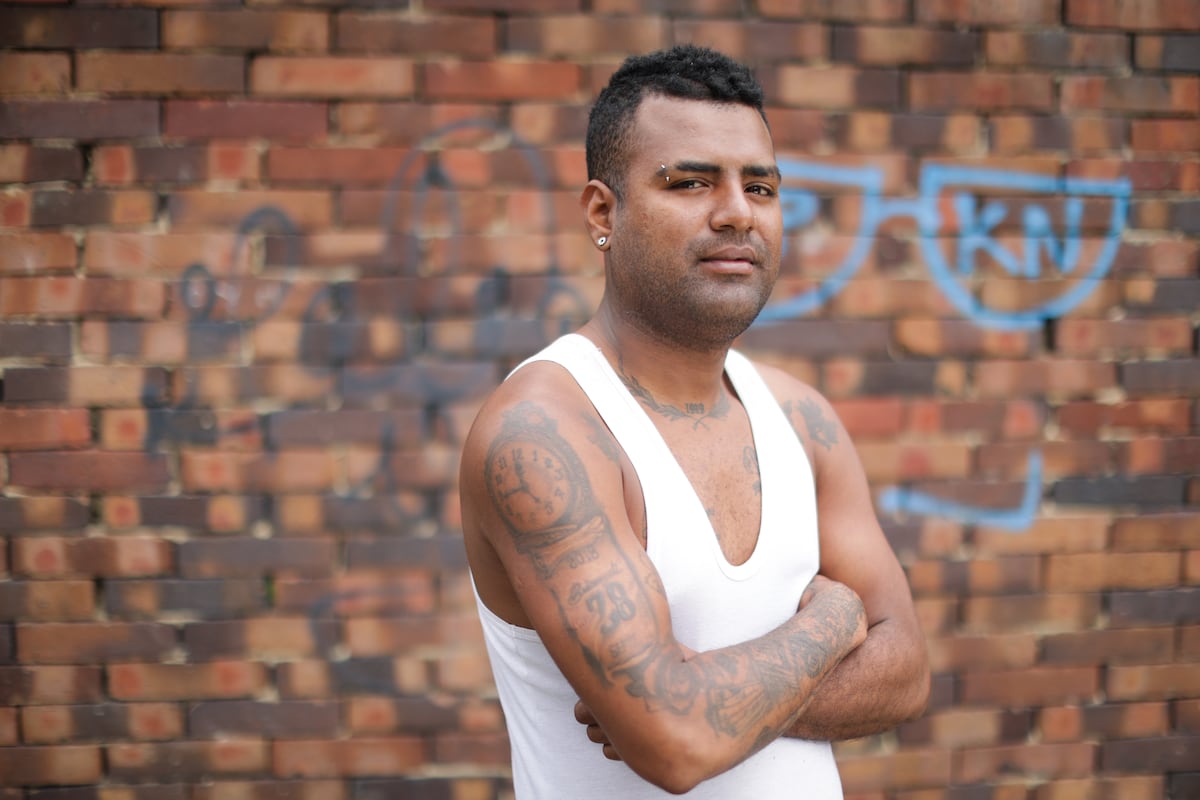
"Like hundreds of thousands of others, Brayan Palencia decided to migrate to the United States to financially support his family. He didn't earn much in Colombia and had a daughter to look after. He crossed the Darien Gap with an injured knee; he paid bribes to cartels in Mexico so that he would be allowed to continue his journey. Even so, he emphasizes, nothing compares to what he experienced at the Terrorism Confinement Center (CECOT), the mega-prison in El Salvador built by President Nayib Bukele."
"In January 2025, he had a court date in California, in order to determine his immigration status. He went, hoping to finally regularize his situation. They took me into a room and told me to wait a while. Without warning, four immigration agents came in, slammed me against the wall and handcuffed me. I explained that I hadn't done anything, but they didn't care."
"Palencia says they took him to a basement, where other migrants were being held in a kind of makeshift jail. They allowed him to make a single phone call to notify his family about his arrest. Agents then took him to a detention center in the border city of Calexico, California. There, along with other Venezuelans, he learned that they were being linked to the Tren de Aragua gang. The only basis for this? Their origins and their tattoos."
Brayan Palencia migrated from Colombia to the United States to support his family, crossing the Darien Gap and paying bribes to cartels. After about a year in the US, he applied for asylum and worked various jobs while awaiting a January 2025 court date in California. During that hearing he was suddenly detained by immigration agents, held in a makeshift cell, allowed one phone call, and transferred to a detention center in Calexico. Authorities linked him and other migrants to the Tren de Aragua gang based on nationality and tattoos. He was later sent to the Terrorism Confinement Center (CECOT) in El Salvador.
Read at english.elpais.com
Unable to calculate read time
Collection
[
|
...
]