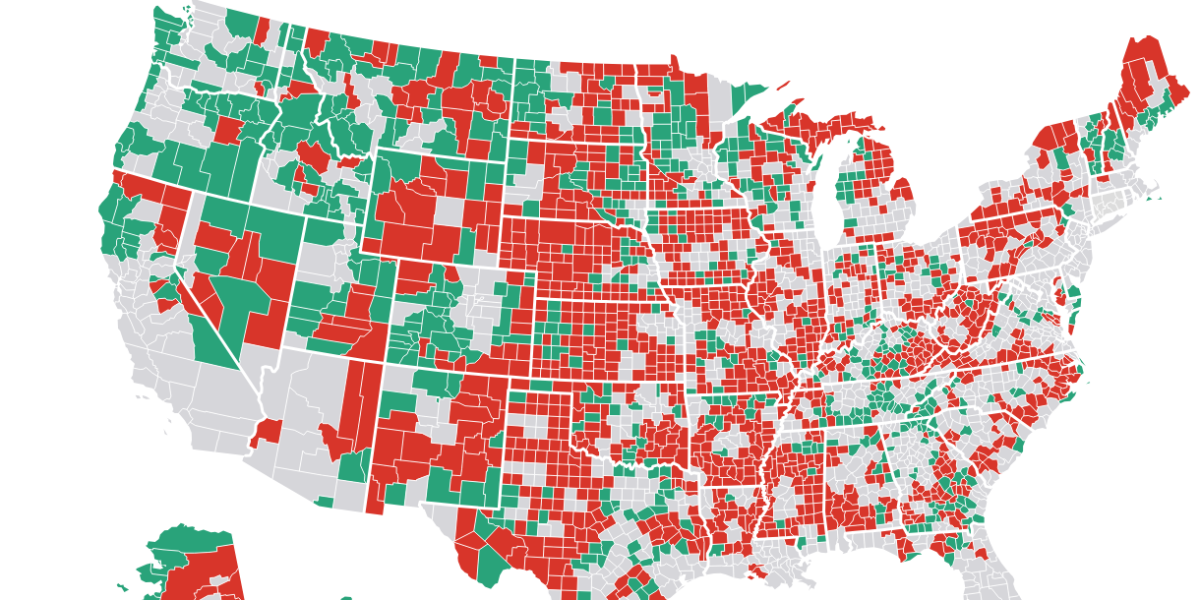
"Yet many people understand rural America through stereotypes. Media and political conversations often use words or terms such as "fading," "white," "farming," "traditional" and "politically uniform" to describe rural communities. In reality, rural communities are far more varied. Getting these facts right matters because public debates, policies and resources - including money for programs - often rely on these assumptions,"
"It's true that from 2010 to 2020 most rural counties lost population. But about one-third grew, especially those near cities or those with lakes, mountains and other natural attractions. And there have been times, like in the 1970s and 1990s, when rural populations grew faster than cities - periods called "rural rebounds." An important thing to know about rural population change is that the places defined as "rural" change over time."
Roughly 1 in 5 Americans live in rural areas defined by small populations and low housing density. Rural communities are often stereotyped as fading, white, farming, traditional, and politically uniform, but they are far more varied. Misunderstandings affect public debates, policies and resource allocation and can leave real needs neglected. From 2010 to 2020 most rural counties lost population, yet about one-third grew, especially near cities or with natural amenities. Historical periods in the 1970s and 1990s saw rural population rebounds, and places designated as rural can be reclassified as urban when they grow.
Read at Fortune
Unable to calculate read time
Collection
[
|
...
]