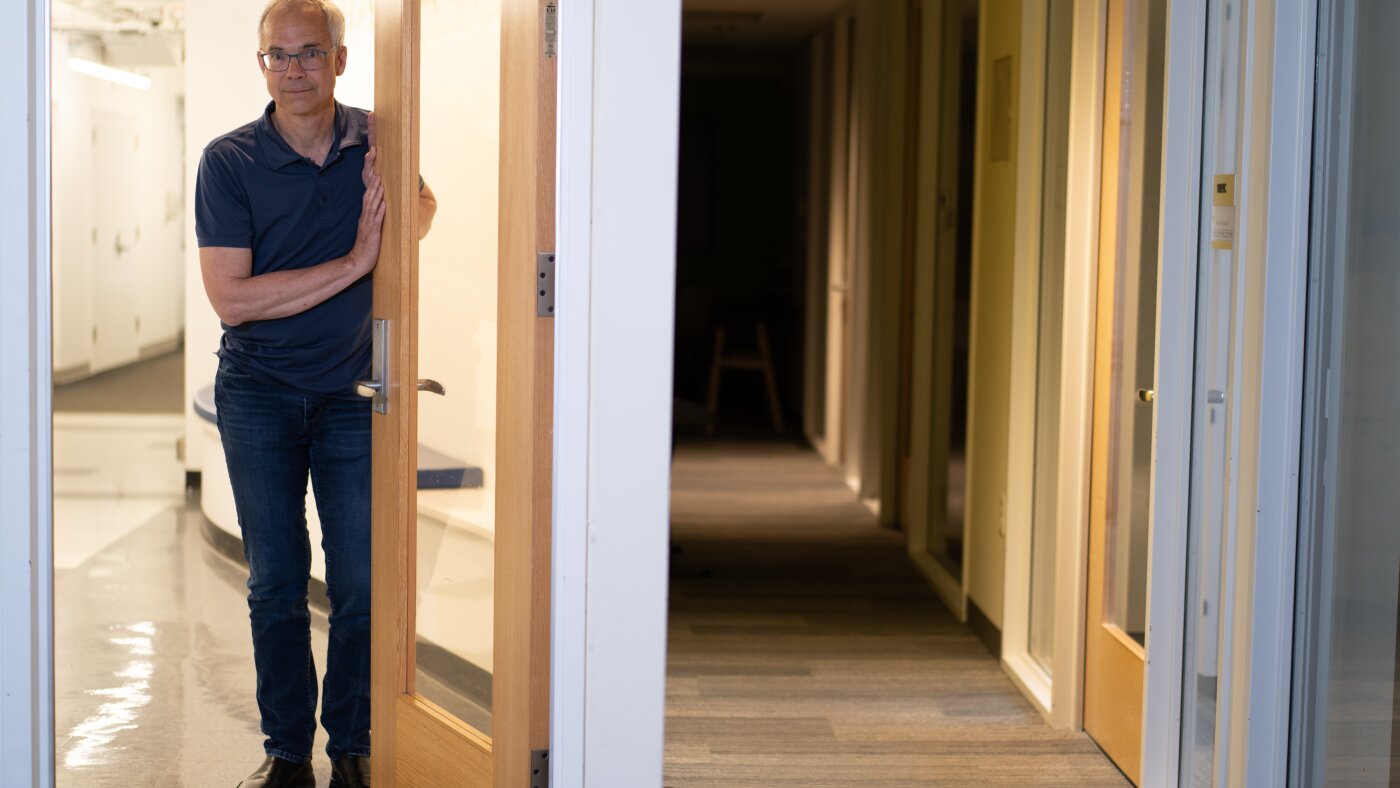
A computational biologist stands in an empty laboratory where many researchers previously worked together on genomic sequencing analysis. Funding ended under the Trump administration, and computer workstations and screens are no longer present, leaving the room silent. The scientist focuses on understanding the origin of life and developed software used worldwide to compare DNA and protein sequences, identify genes, and predict gene functions. The tools support a wide range of studies, including cancer and neurodevelopmental disorder research. The software’s influence is described as ubiquitous, comparable to essential laboratory instruments. The lab’s design includes animal images created with personal involvement from family, reflecting a long-term commitment to research.
"More than a year ago, this lab was filled with over a dozen researchers. On a given day they might be working independently on analyzing genomic sequencing or gathered around the group table, drinking coffee and helping each other troubleshoot questions about genomic data from different species. Now, after his funding was terminated under the Trump administration, the computer screens are gone and the room is silent. He's one of the last people left. "Seeing these labs empty this is not the way it's supposed to be," he says. "This was a very vibrant lab.""
"He has devoted his career to one fundamental question. "I'm really interested in the origin of life," he says. "I want to know where it all came from." He and his colleagues spent years developing software that could be used to seek out an answer. Scientists around the world now use the tools his team created to compare DNA and protein sequences, identify genes, and predict what they do. Their work underpins countless studies, including research related to cancer and neurodevelopmental disorders."
"Eddy describes its use as being as ubiquitous as microscopes or pipettes. "It's very affirming for me to pick up sort of semi-random papers in the literature in fields that I care about and see them using our software over and over again," he says. When the lab was designed more than a decade ago, he worked closely with an architect. On the wall are pictures of animals. His daughter, who was 12 at the time, stenciled them for him."
"Mixed in with pictures of mice and fish are laboratory creatures. "There's a bacterial virus called T4 that I did my thesis on," he says, pointing to the wall. In 2025, Eddy received a letter from the National Institutes of Health, "
Read at www.npr.org
Unable to calculate read time
Collection
[
|
...
]