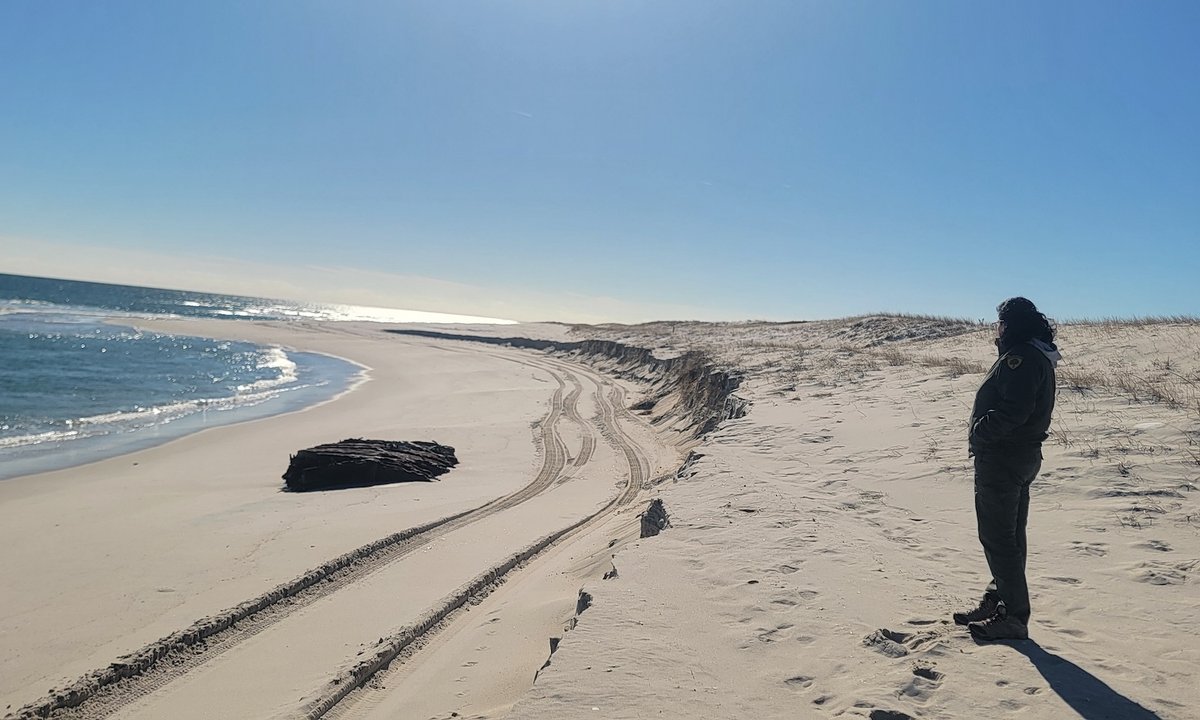
"As unusual as it may sound, there are times when shipwrecks find their way back to land-a result of erosion and storm activity. This has recently been the case for remains of the 19th-century schooner Lawrence N. McKenzie, which were partially exposed last month on the shores of New Jersey's Island Beach State Park. The 98ft ship, built in Massachusetts in 1883, had been en route from Puerto Rico to New York City when it sank on 21 March 1890."
""It was each captain's knowledge of the area that helped sail safely into harbour, but without weather reports, storms caught ships unaware," Steve Nagiewicz, a local maritime archaeologist, tells The Art Newspaper. "Archaeologists estimate that there are 4 million shipwrecks worldwide, and at least 3,000 to 5,000 of those are off the Jersey shore.""
"The schooner's wooden and metal remains were identified with help from the , an important resource containing 4,800 records documenting vessels lost between 1701 and the present, most dating from the 19th century or earlier. Identification of the exact ship, however, is not always definitive. "Construction of ships like this was common," Nagiewicz says of the recently discovered remains. "Sometimes we can ident"
Erosion and storm activity can re-expose historic shipwrecks along coastlines. Remains of the 19th-century schooner Lawrence N. McKenzie surfaced on Island Beach State Park in New Jersey. The 98ft vessel, built in Massachusetts in 1883, sank on 21 March 1890 while sailing from Puerto Rico to New York; all eight crew members survived but the cargo of oranges was lost. The waters off New Jersey are notorious for sandbars, shoals and unpredictable weather, prompting early life‑saving stations. Archaeologists estimate thousands of wrecks off the Jersey shore, and identification relies on historical vessel records that can be inconclusive.
Read at The Art Newspaper - International art news and events
Unable to calculate read time
Collection
[
|
...
]