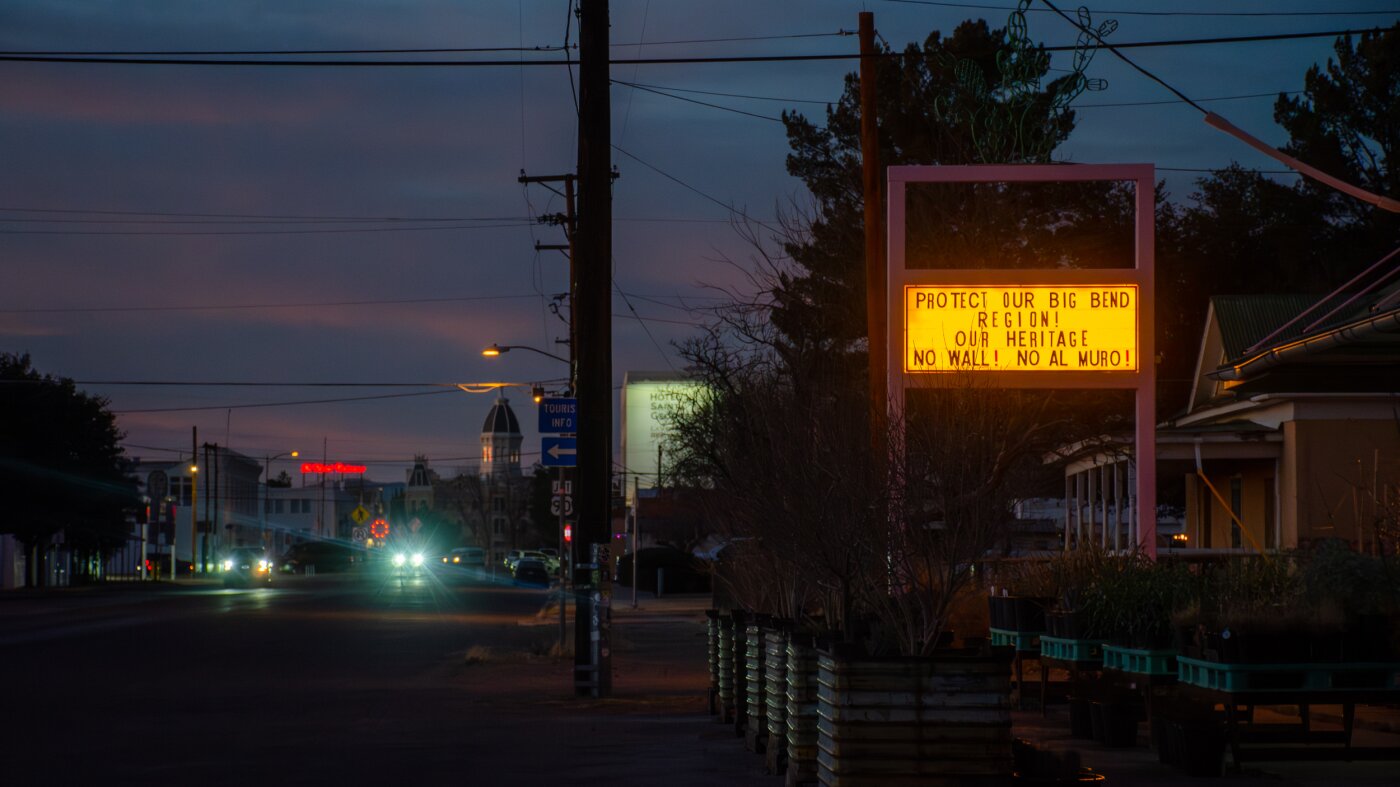
Joe Pineda farms and raises cattle near the Rio Grande in Big Bend, where his family’s history on the land dates to the late 1800s. He received a federal letter warning of eminent domain proceedings unless he agrees to sell or voluntarily provides access for border wall construction. Plans call for about 175 miles of border barrier, including 30-foot steel fences, patrol roads, flood lighting, and surveillance systems. Opponents across political lines argue the wall is unnecessary in this area and could harm the environment, Indigenous sites, dark skies, and wildlife such as black bears, bobcats, and bighorn sheep. Pineda says the tourism economy is at risk.
"Pineda and his family have received a letter from the federal government warning of eminent domain proceedings if they don't agree to sell the land or voluntarily give access for border wall construction. It's a scene playing out across the Big Bend as the government looks to build roughly 175 miles of "border barrier." This area, one of the last pockets of untouched frontier country, is set for 30-foot-tall steel fences, patrol roads, flood lighting and surveillance systems."
"The federal government plans have united an unusual coalition of people across the political spectrum who say a wall is not needed here. They worry about threats to the environment and Indigenous sites, to impact on the region's famously dark skies and on wild animals, like Black bears, bobcats and bighorn sheep. It's all part of a $56-million dollar tourism industry that Pineda says is now in jeopardy."
""It's things like that that I'm going to miss," said Pineda as a gentle wind ran through the overgrown reeds and mesquite trees crowding the river. "It's the time that you can enjoy with your kids, and enjoy (the) heritage of your land, where your great-grandparents and everybody else before you lived and it's going to be taken.""
""They're killing our economy with this wall," Pineda said, standing by the Rio Grande. "This area gets a lot of money from tourism. It's going to make everything change, it's gonna be sad.""
Read at www.npr.org
Unable to calculate read time
Collection
[
|
...
]